
Most independent and religious schools run the same handful of trips every year: the 8th-grade Washington trip, a language trip to Europe or Quebec, a service week in Appalachia or Central America, an outdoor education week, and the senior trip. Each is planned by a teacher, a campus minister, or a department chair, booked through an operator, and approved by the Head. ETI360 prepares the documents that sit between those three: the risk management working file, the itinerary record, the medical access page, the parent pack, the field pack the chaperones carry, the weather briefing, and the report that closes the trip.
We work from what you already have. You email us the operator’s itinerary and documents and your trip policy; we return the seven documents, in your school’s name and branding, at Letter size. The operator runs the trip. The school approves it. ETI360 prepares what the school reads.
The documents below are from a fully worked example for Harborview, our sample school. It is not a real school, so every page can be shown in full. US example trips are in preparation: Washington, DC (8th grade, four days); New York City arts and theater; Chicago architecture and museums; Outdoor education week (state park or camp); Appalachia service week (West Virginia); Costa Rica service and ecology; Montreal and Quebec City language trip.
Per trip · Seven documents
Trip Readiness for US schools
Is this trip ready for the Head to approve? One consistent set for every departure, from the working file the risk management plan draws on to the report that comes home.
1 · For the approval
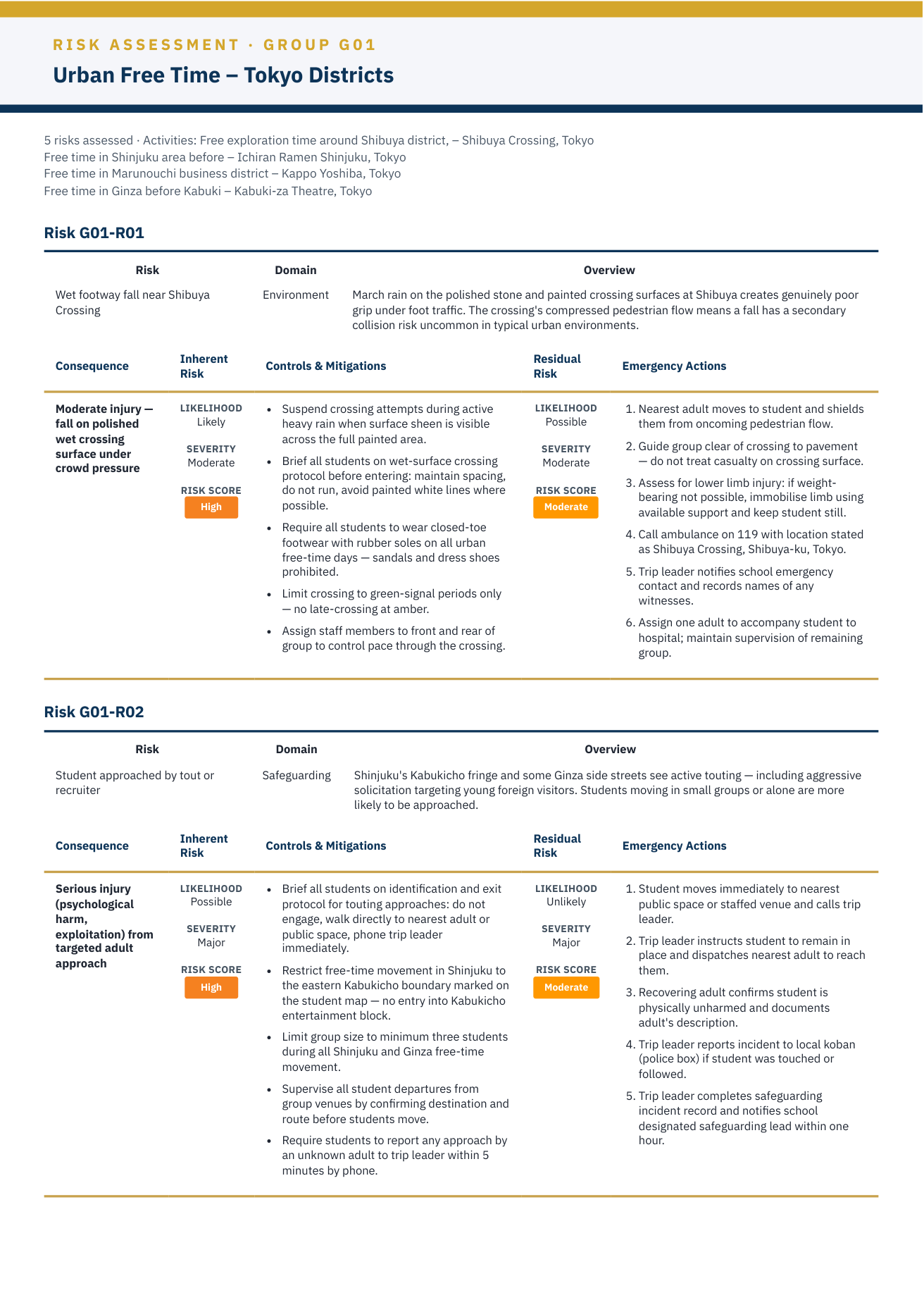
Trip Risk Working File
The information behind your risk management plan, organized one section per activity group: what students will do and where, the hazards, the controls your operator already describes, the controls the school may add, and the emergency actions for each place. Prepared for the school to review, complete, and approve. ETI360 does not approve or certify it.
Read by Head of School · Trip leader · Business office
2 · The operational record
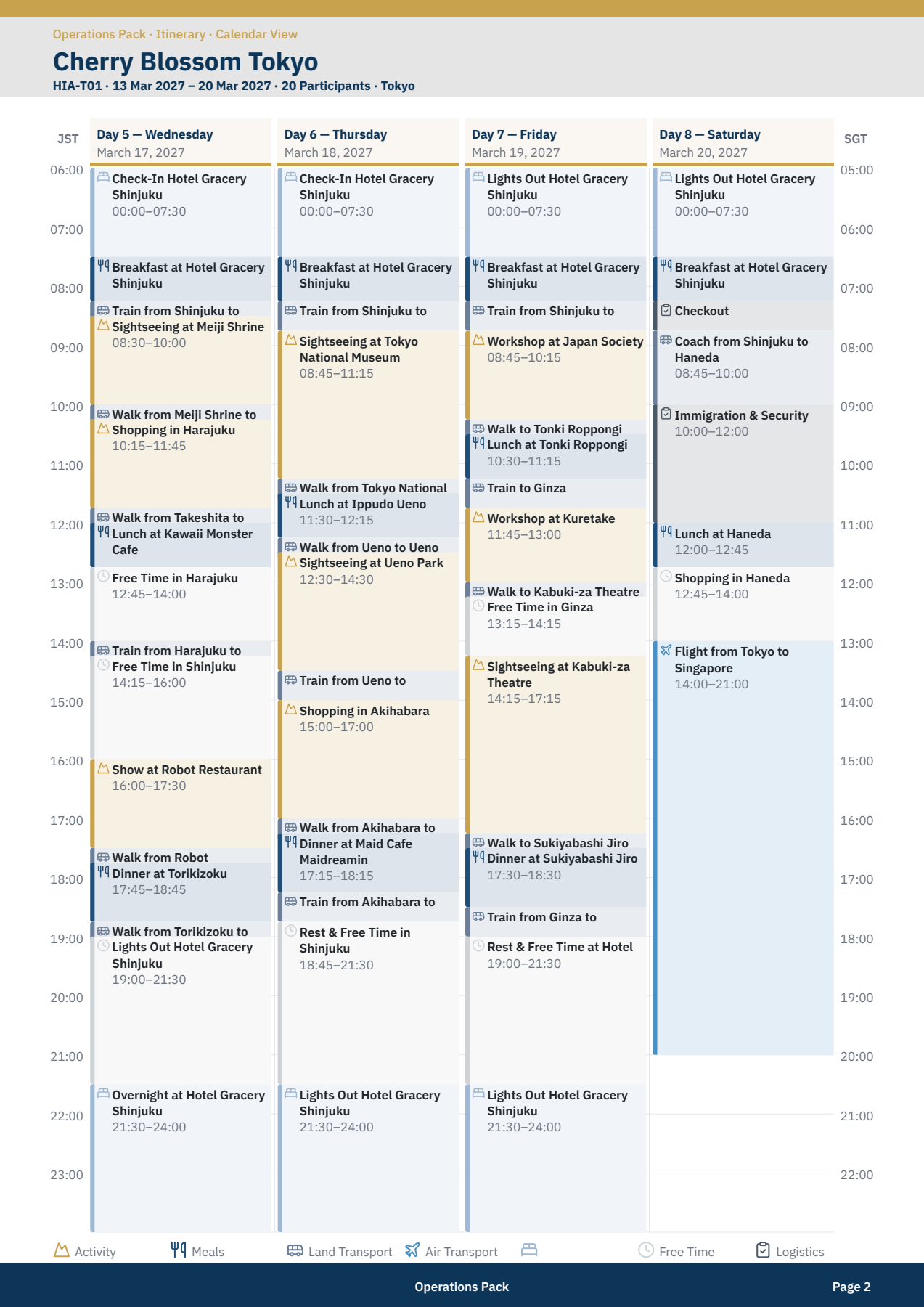
Itinerary Report and Calendar
The trip as designed, hour by hour and gap-free: a color-coded calendar for the scan and a day-by-day table for the detail, with every transfer, meal, and overnight in place. The same record the other six documents are built from, so they agree with each other.
Read by Trip leaders · Chaperones · Front office
3 · Where care comes from
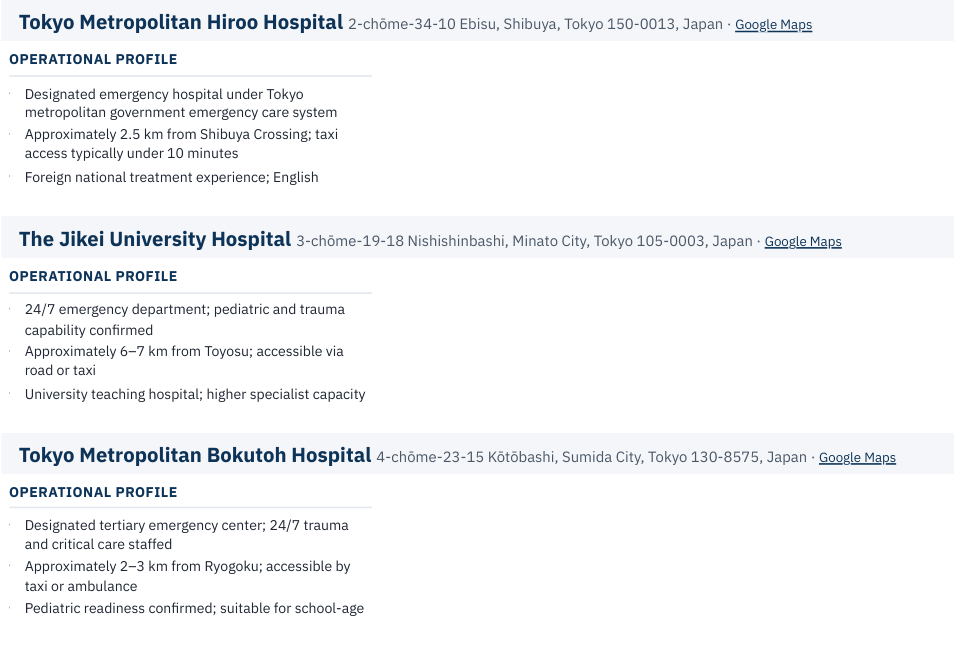
Medical Access
The emergency rooms and urgent care nearest each place on the itinerary, with drive times from the hotel and from each activity site, verified contact details, and notes on what each facility can handle. Connected to the actual route, not the city in general.
Read by Trip leader · School nurse · Administrator on call
4 · For families
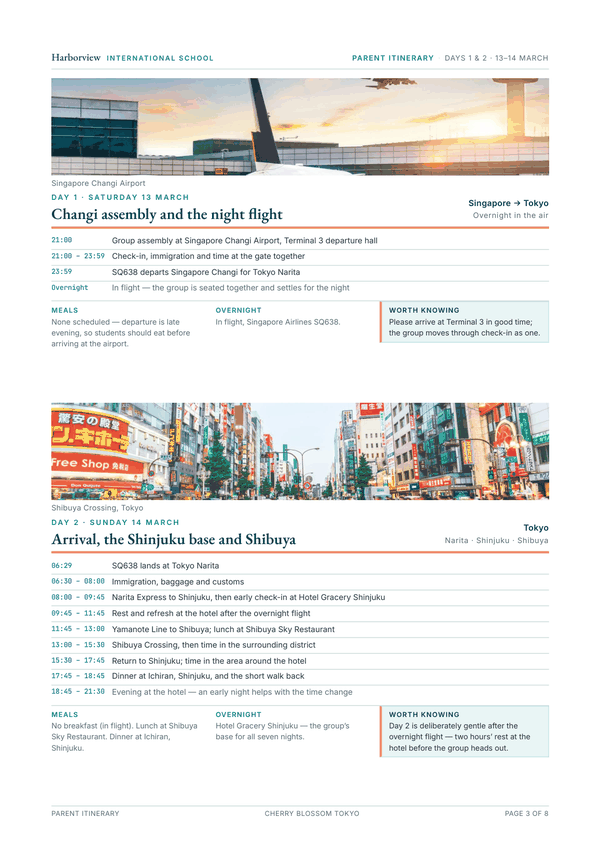
Parent Information Pack
The trip written for families in the school's own voice: the days, the supervision, meals and rooming, how the school communicates while the group is away, and what to send. Summarizes the controls; the working file itself stays school-side.
Read by Parents
5 · What travels with the group
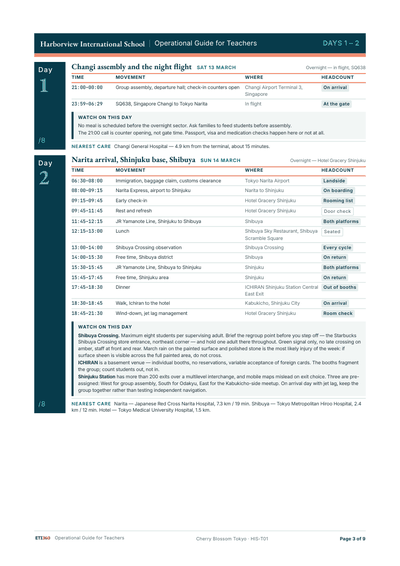
Trip Leader Field Pack
A daily brief for every day of the trip, the contacts and escalation chain, the emergency room details per location, and the emergency procedure cards, in one printed pack sized for a backpack. Emailed to your coordinator to forward to the staff who travel.
Read by Trip leaders · Chaperones
6 · Conditions
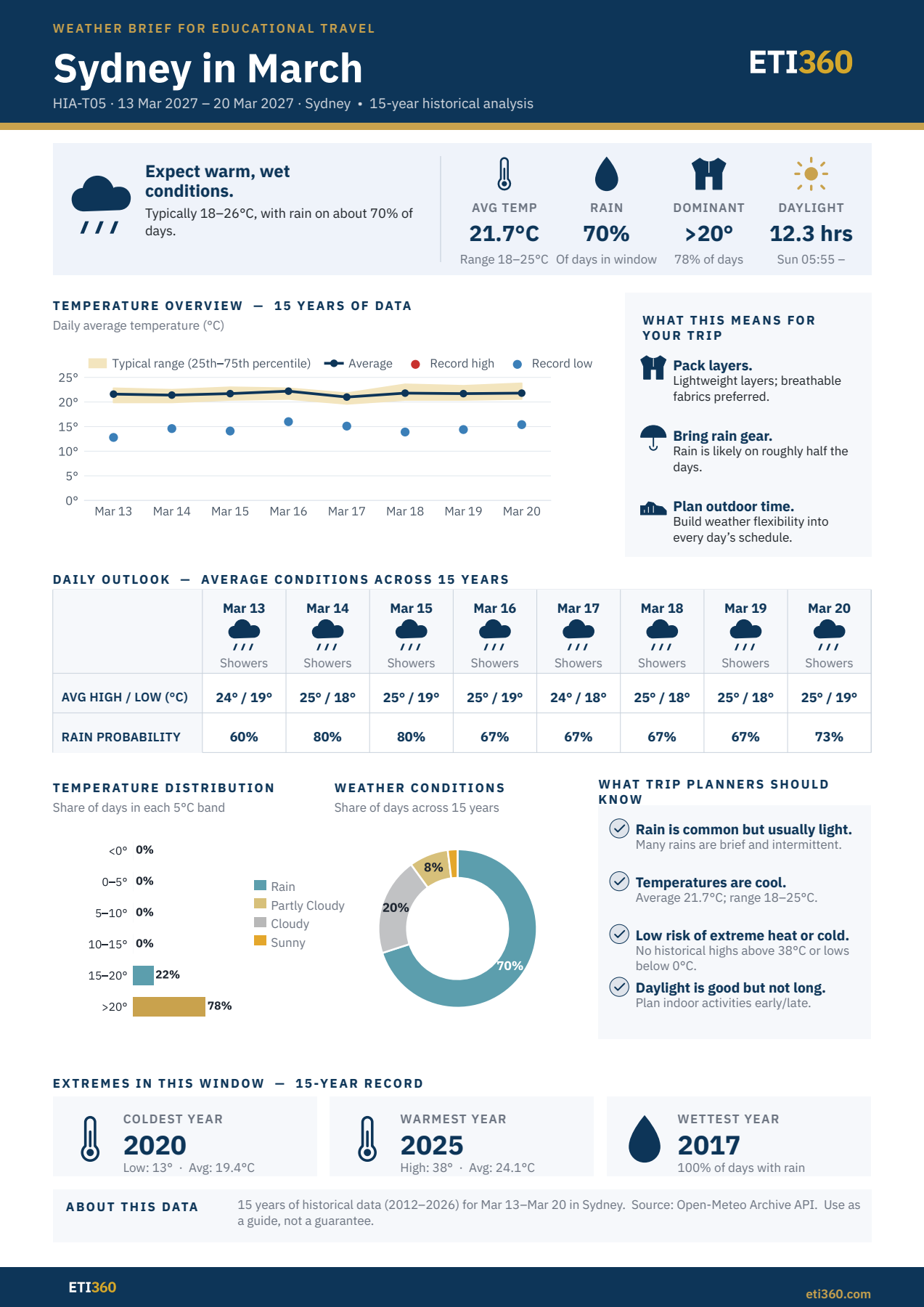
Weather and Climate Briefing
The travel window quantified from fifteen years of records for the destination and dates: temperature range by day, rain, daylight, and the conditions that would prompt a change of plan. Historical, never a forecast, so it can be prepared months ahead.
Read by Trip leaders · Coordinator
7 · After return
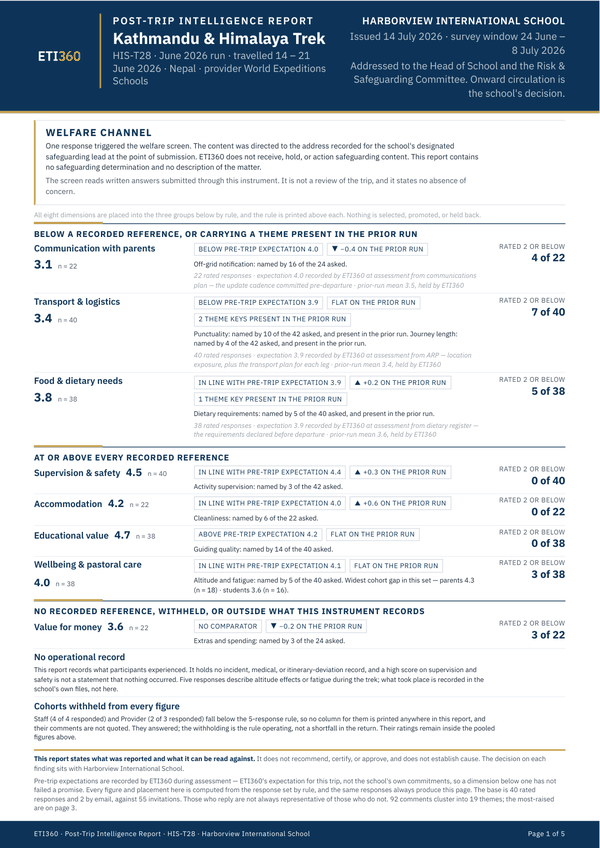
Post-Trip Feedback Report
How the trip actually ran: check-ins, deviations from plan, incidents recorded, and what students, parents, and chaperones said in four questions. Returned as a short PDF so next year's trip starts from what this one learned.
Read by Head of School · Trip leader · Next year's planner
What US schools ask us first
We book through an operator. What does this add? Your operator’s documents are the starting point, not a competitor. ETI360 organizes them, with your policy and the itinerary, into the file your Head reviews and the pack your chaperones carry. Nothing the operator does is replaced.
Which standard is this against? There is no national school-trip statute in the United States. Schools work to their accreditor’s standards, their insurer’s requirements, NAIS guidance on off-campus programs, and for international travel the State Department advisories. The ETI360 Operational Capability Framework organizes your documents against those references without replacing them.
Student data. ETI360 does not receive student records or personally identifiable student information. Trip files name places, dates, providers, and staff roles. Your FERPA obligations are not transferred to us.
Who does the work. Dan Skimin, Principal Consultant, worked in schools for 23 years, most of them in American-curriculum international schools, and has spent the past 15 years on the preparation, documentation, and oversight of school travel. Seb Wong, Senior Consultant, is part of every engagement.
Pricing. Per trip, in US dollars: the number of trip days times a per-day rate covers the seven documents. A one-day trip is a flat rate. Nothing is free, and there is no first-trip fee.
Where we are. ETI360 PTE. LTD. is a Singapore company with a US office at 412 Avon Belden Rd, Avon Lake, OH 44012. We respond within two business days.
I would love to talk with you about your school’s travel programs and how ETI360 could help. Send me a message, and we’ll find a time that works for you. Contact us →
ETI360 prepares and organizes the supporting information. The school and its providers retain responsibility for risk decisions, live assessments, and final approval.