
Tideline School in Portland, Maine, is starting the ninth-grade year with a four-day hut-to-hut trek in the White Mountains of New Hampshire: 20.9 miles on the Appalachian Trail and its approach trails from Franconia Notch to Crawford Notch, with three nights in the Appalachian Mountain Club's huts. ETI360 brought together the school's plan, the huts' published information, and the national forest's rules, measured each day's distance, climb, and daylight from the route itself, checked the plan against the wilderness boundary and the roads, and listed the emergency departments by drive time from every trailhead; the school confirms which one the group uses. Each document below is written for the person who uses it, and each opens in full.
Tideline School is a fictional school; its location is shown for illustrative purposes.
- Trip
- White Mountains Hut-to-Hut Trek, Tuesday, September 7 to Friday, September 10, 2027
- Group
- 20 ninth-grade students and four trail adults, one adult for every five students, walking as two parties of twelve; a fifth adult in the valley
- Program
- Outdoor education, with a science and history unit on the White Mountains: alpine ecology, the Appalachian Trail, and the history of the huts
- On foot
- 20.9 miles and 8,710 feet of climb over four days, above treeline on Wednesday and Thursday mornings
- Nights
- Three nights in the Appalachian Mountain Club's huts: Greenleaf, Galehead, and Zealand Falls
- Travel
- Charter coach out to Franconia Notch and home from Crawford Notch, with a coach on call on Wednesday and Thursday mornings for the weather routes
- School
- Tideline School, Portland, Maine, a fictional school
Decision by decision
Each decision the school makes about the trip, and the documents that support it. Every document is written for the person who uses it, and every one opens in full. Under each document, Look inside shows three of its pages as the school receives them; select a page to open the US Letter edition at that page.
ETI360 builds every document to two paper sizes. The US Letter edition (8.5 × 11 inches) is the standard in the United States; the A4 edition (210 × 297 mm) is the standard in most other countries.
Approving the trip
The record the office files, and the Trip Risk Working File for the school to review, complete, and approve.
School
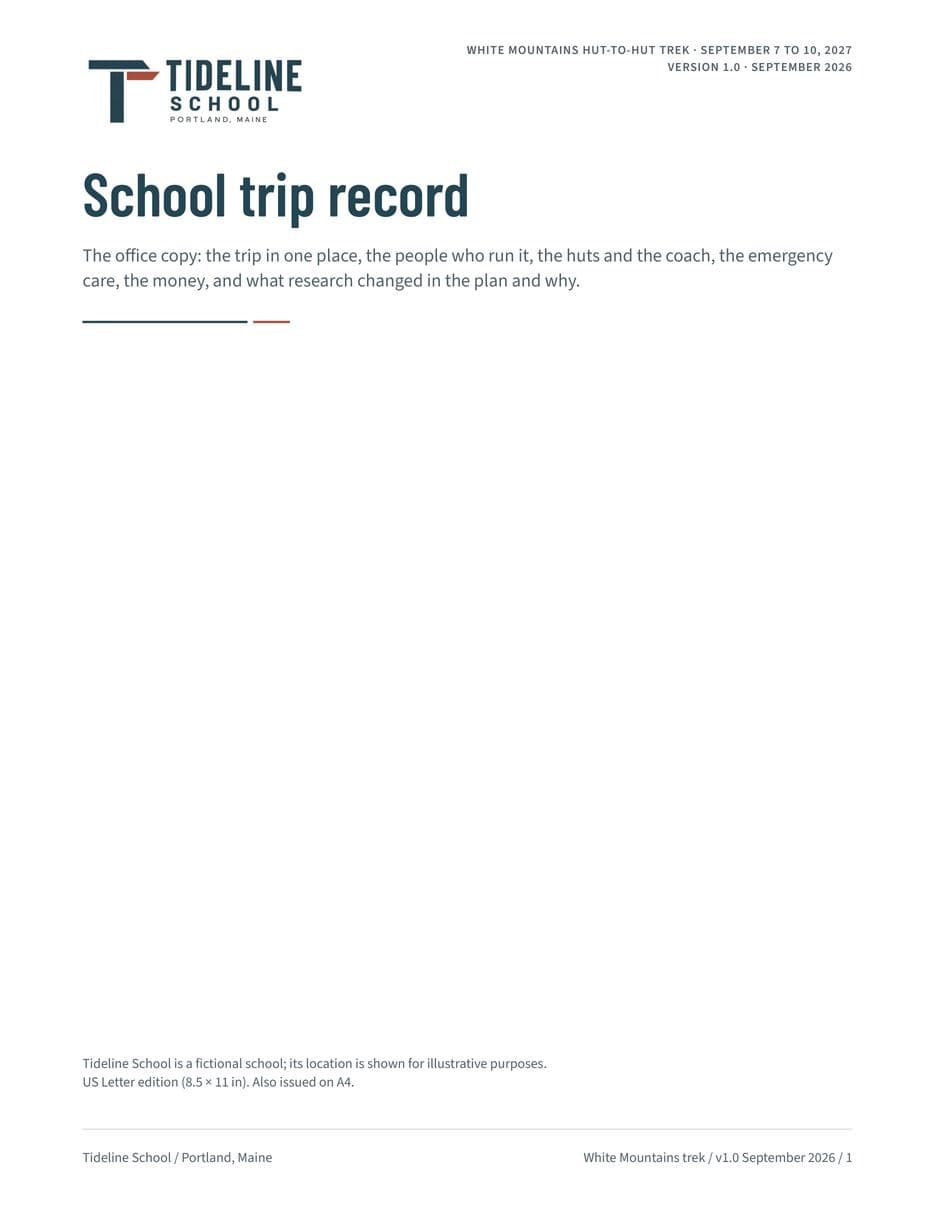
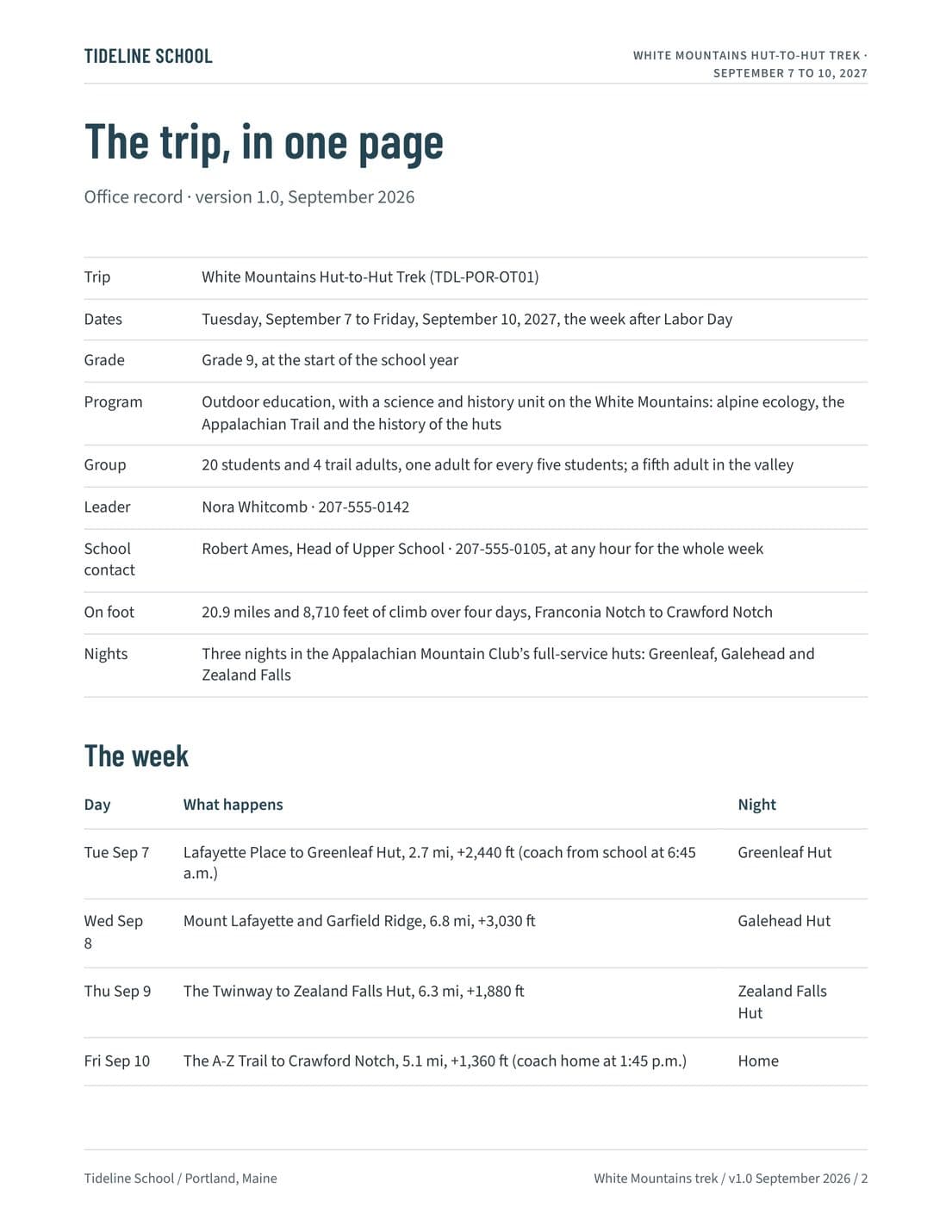
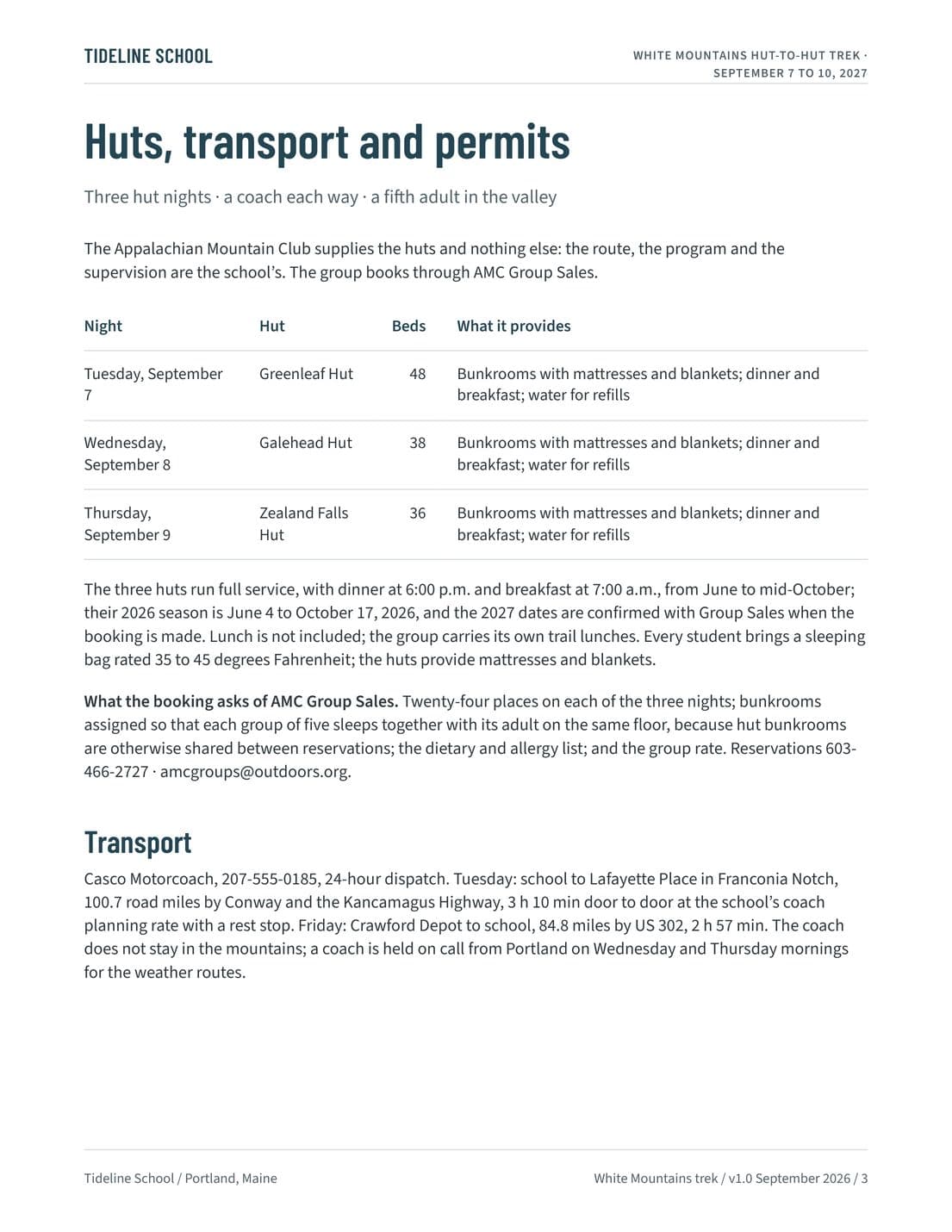
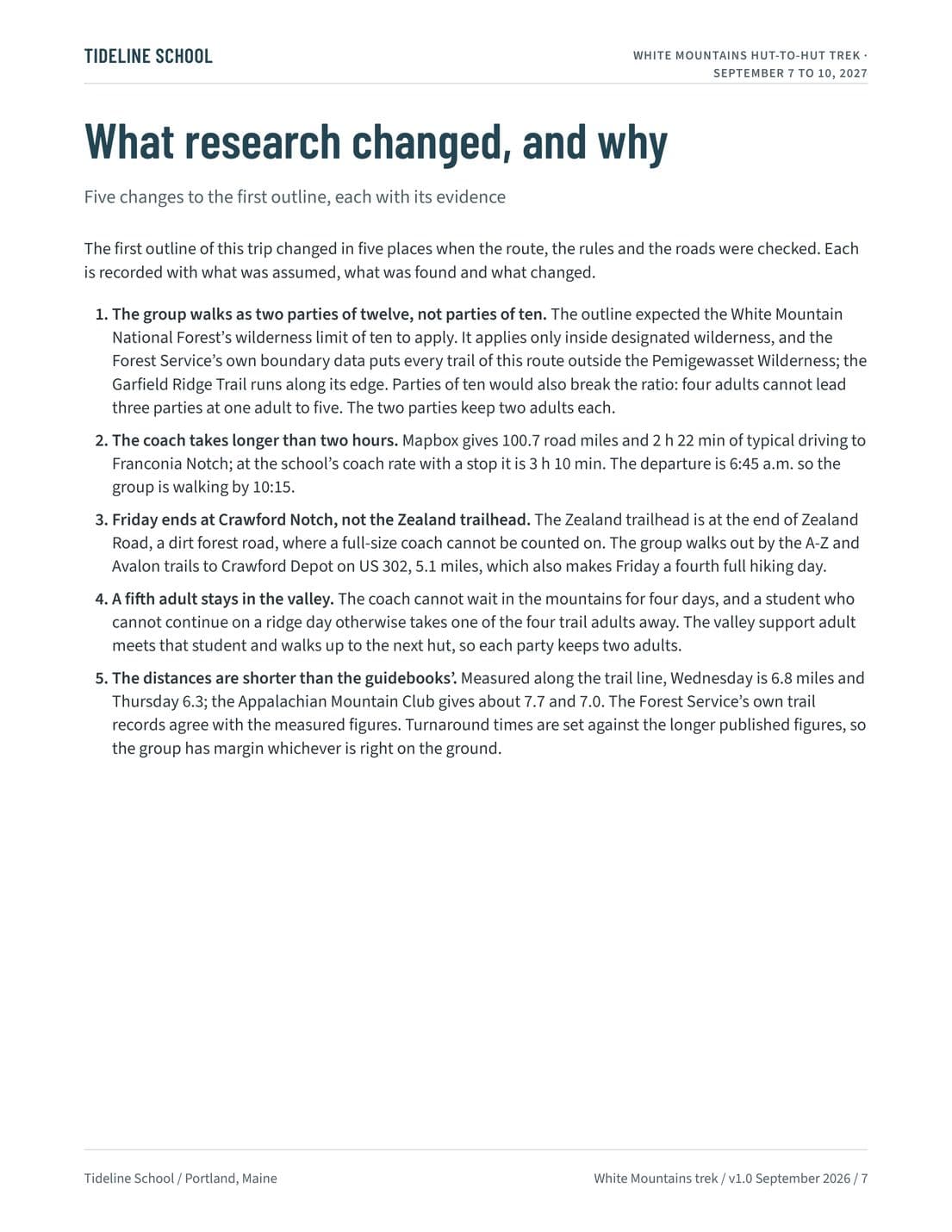
School Trip Record
The office copy: the trip in one place, the people who run it, the huts, the coach and the permits, the emergency care, the cost, and what the research found and how the plan changed.
Look inside
School
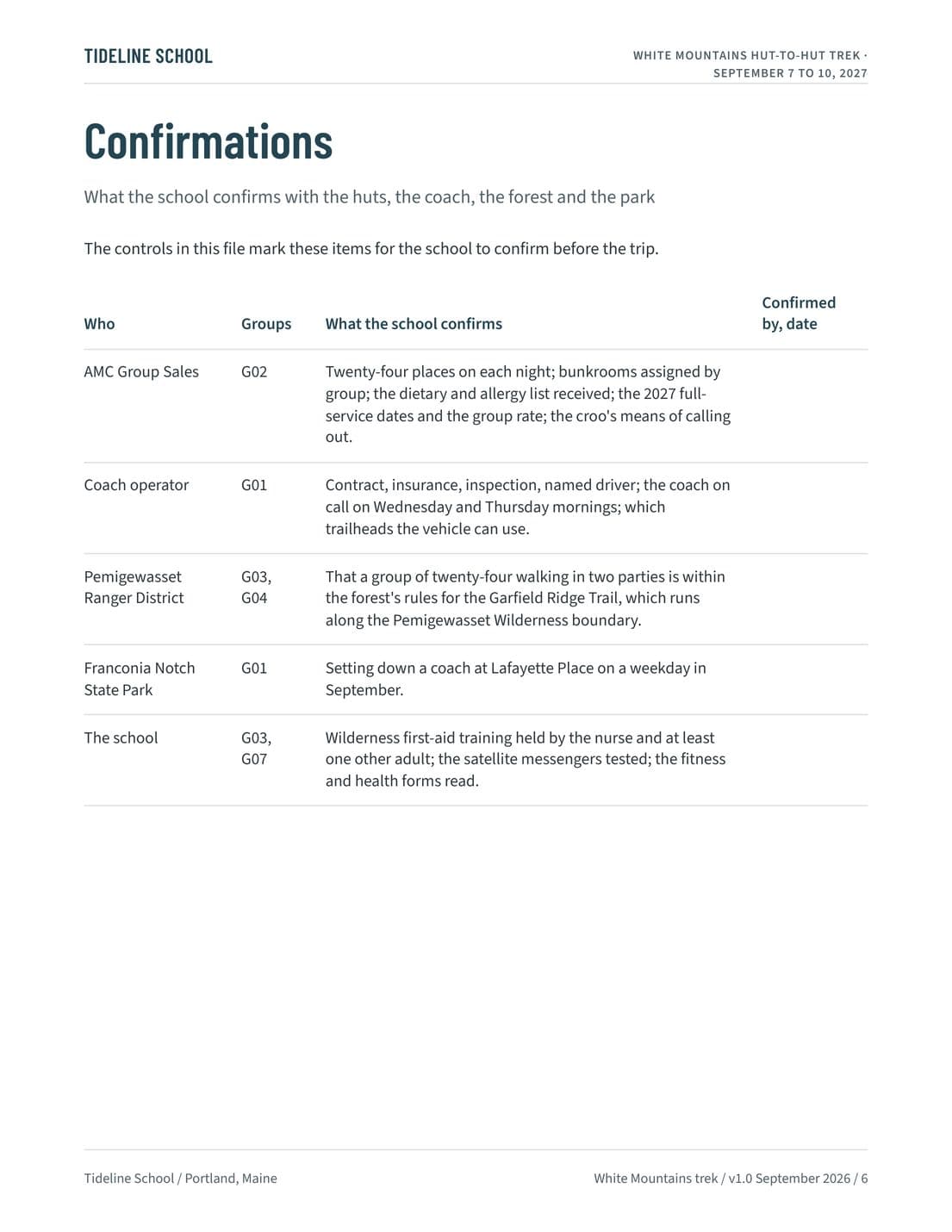
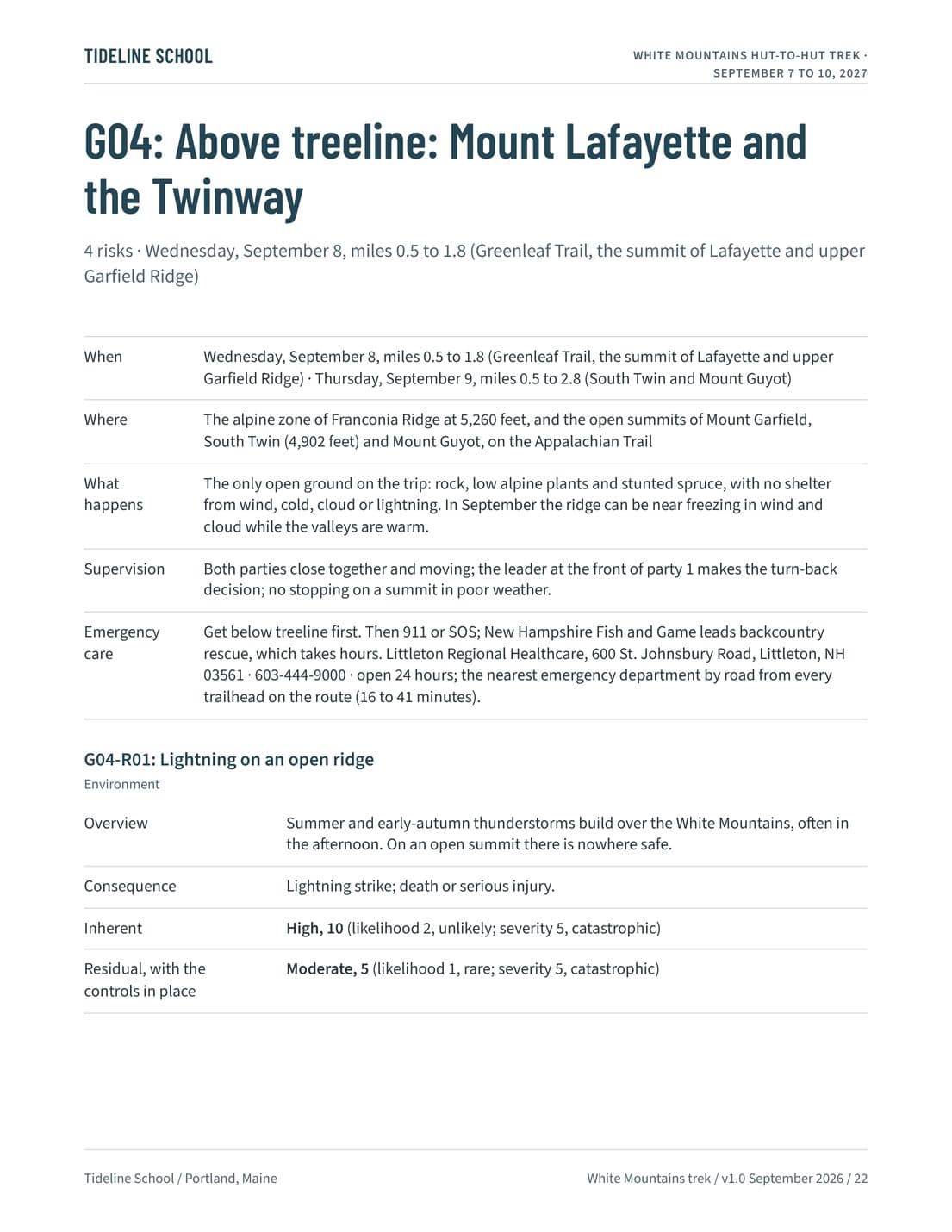
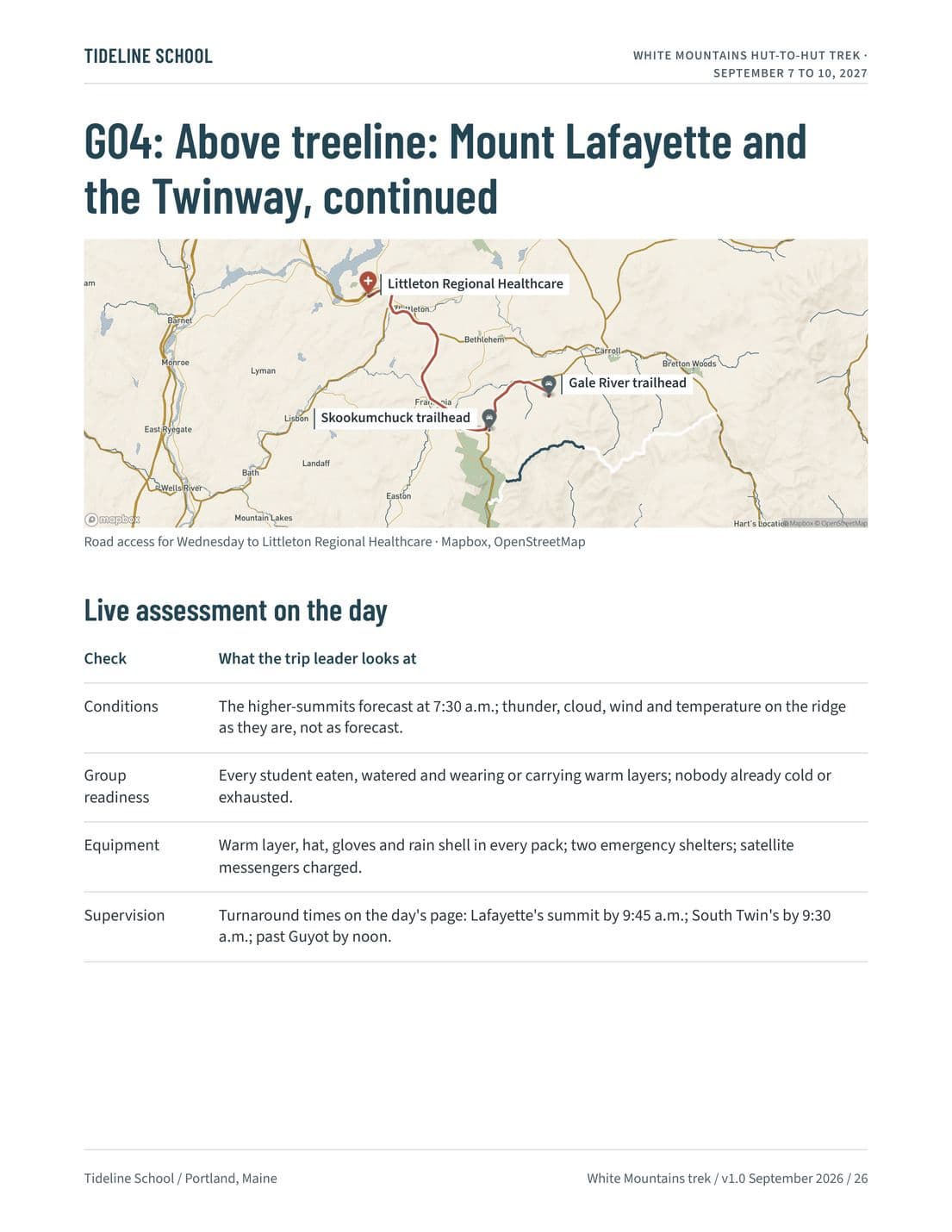
Trip Risk Working File
Hazards, controls, and emergency actions organized one section per activity group, from the coach and the hut nights to the open ridge and rescue in the backcountry, with the live-assessment prompts for the trip leader. The school reviews it, completes it, amends it, and approves it.
Look inside
Telling families
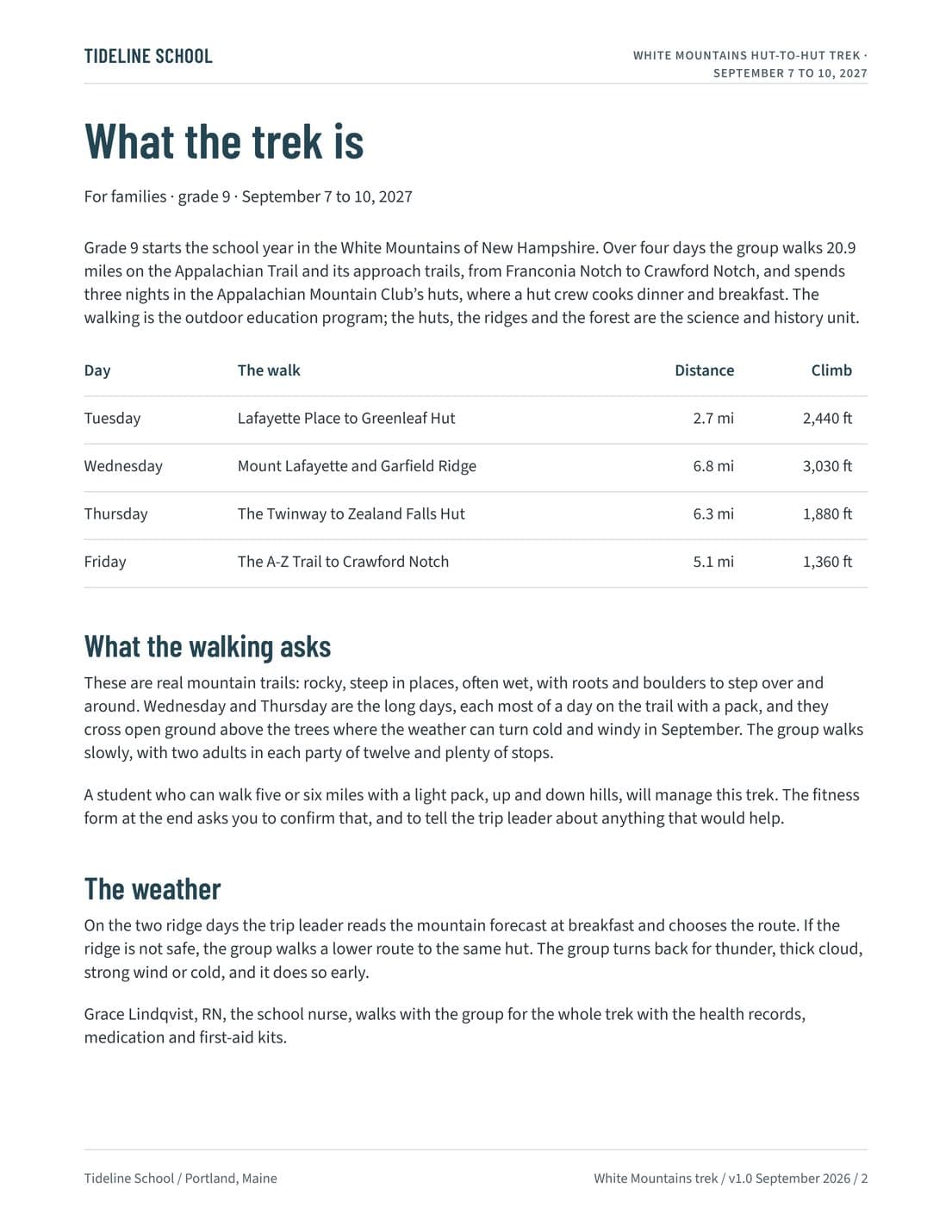
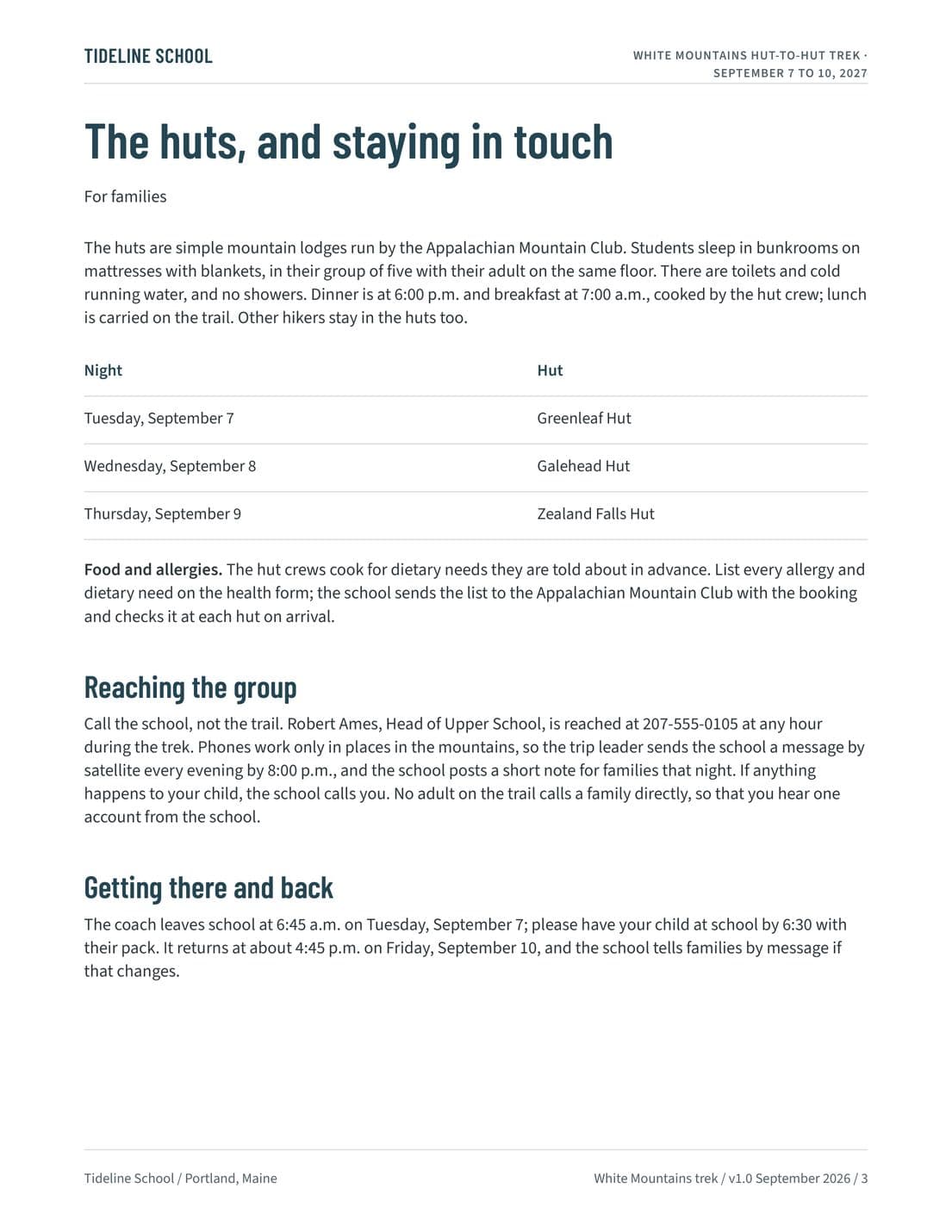
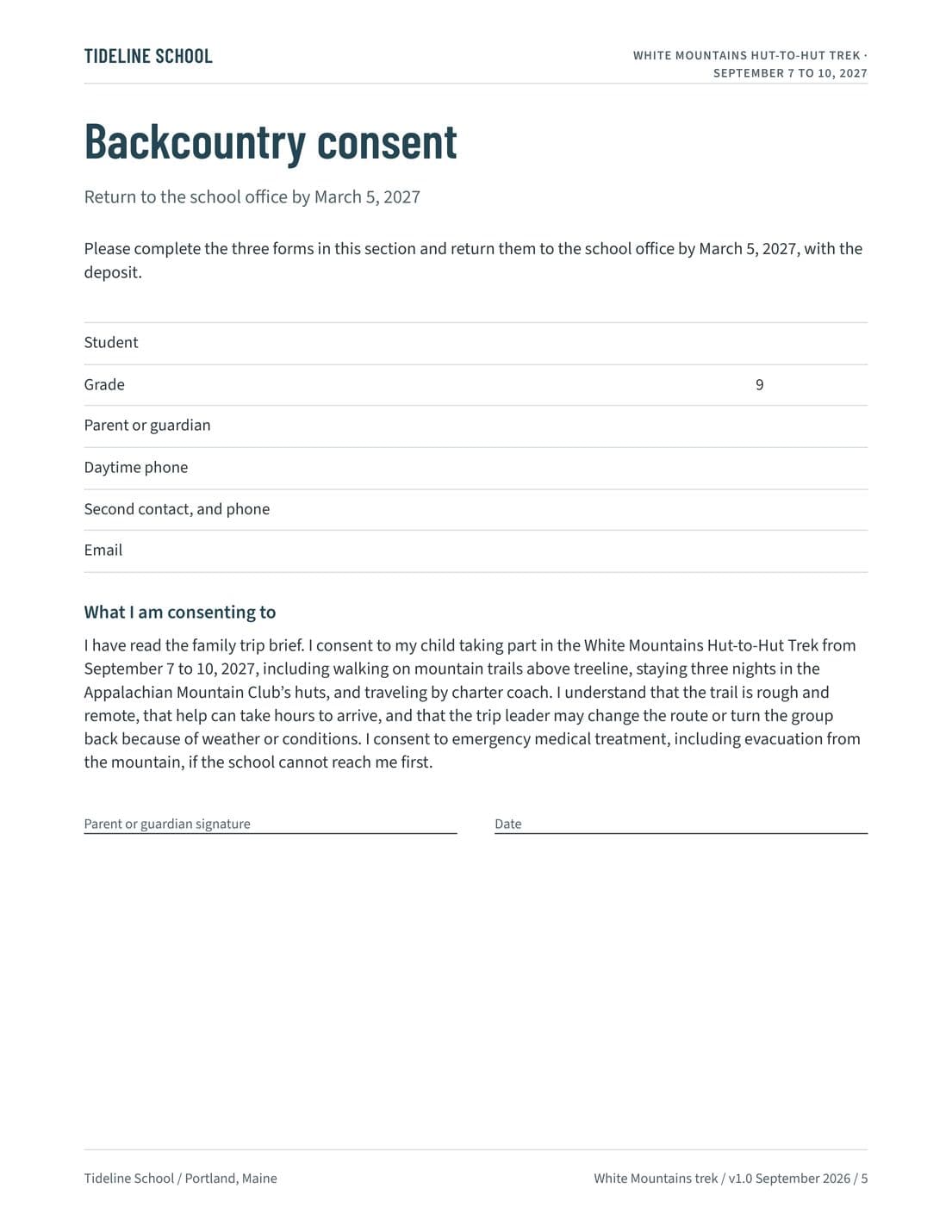
What each day asks, the huts, what to pack, and the consent, fitness, and health forms that come back with the deposit.
Families
Family Trip Brief
What the trek is and what the walking asks, the huts and how families hear from the school, what to pack and what it costs, then the backcountry consent, fitness confirmation, and health update that return with the deposit.
Look inside
Preparing the leader and trail adults
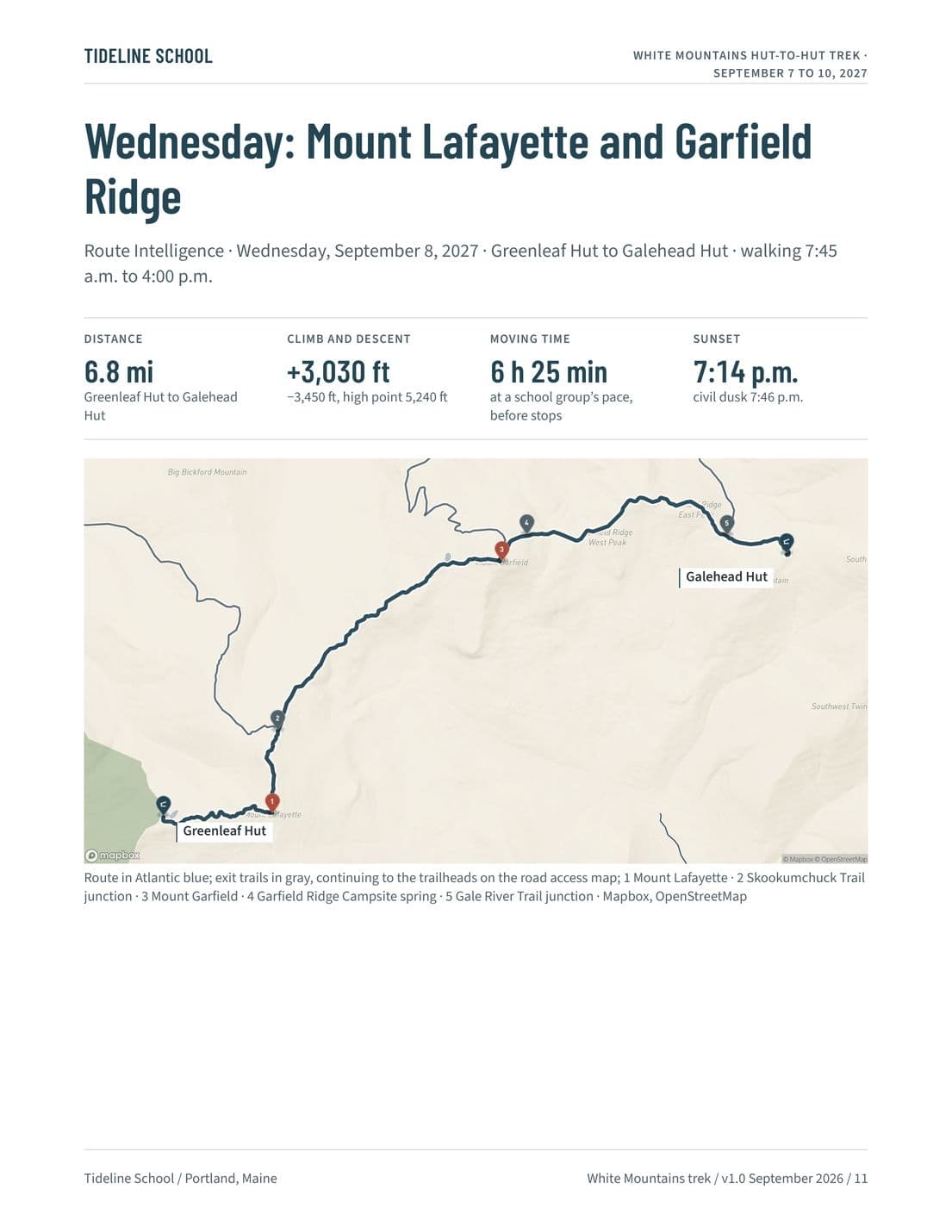
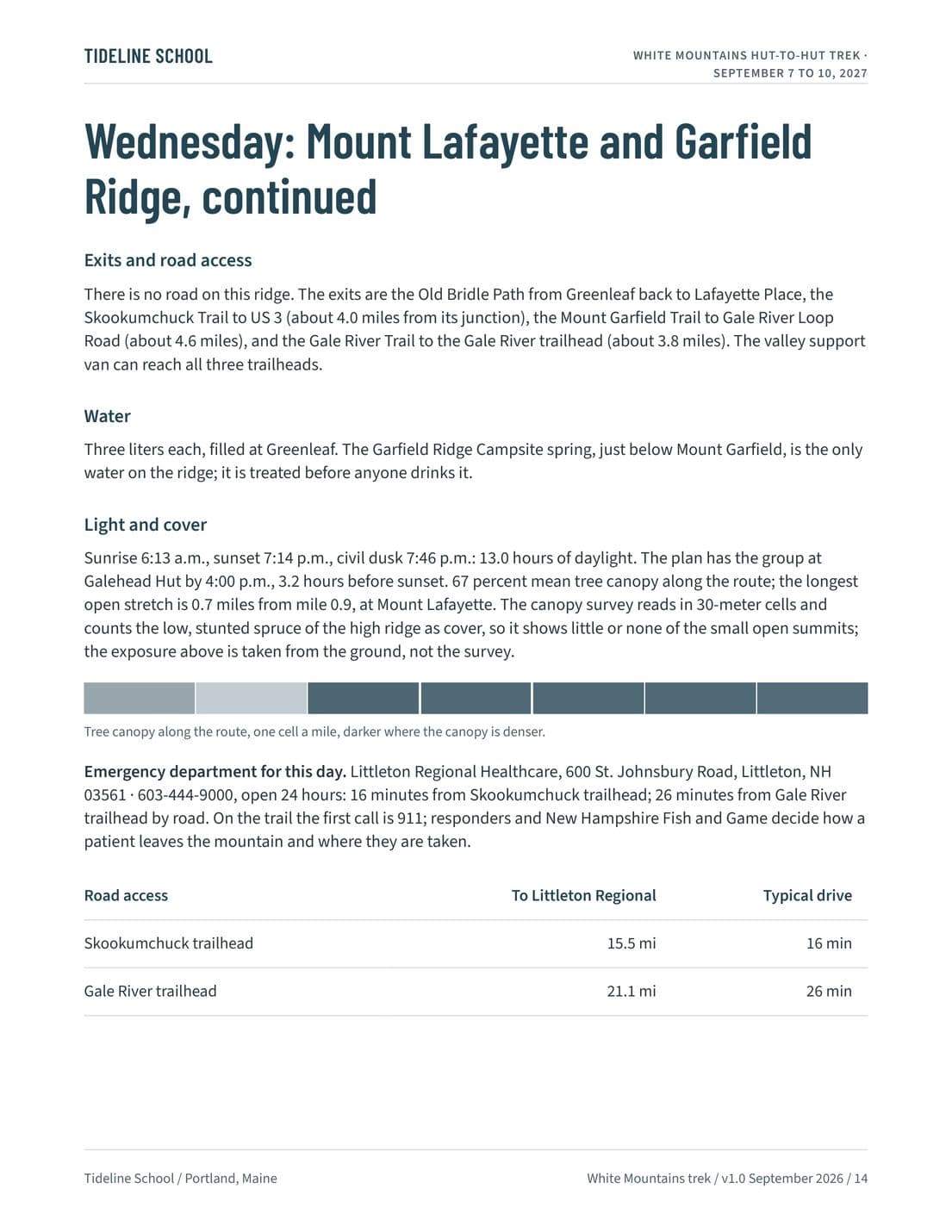
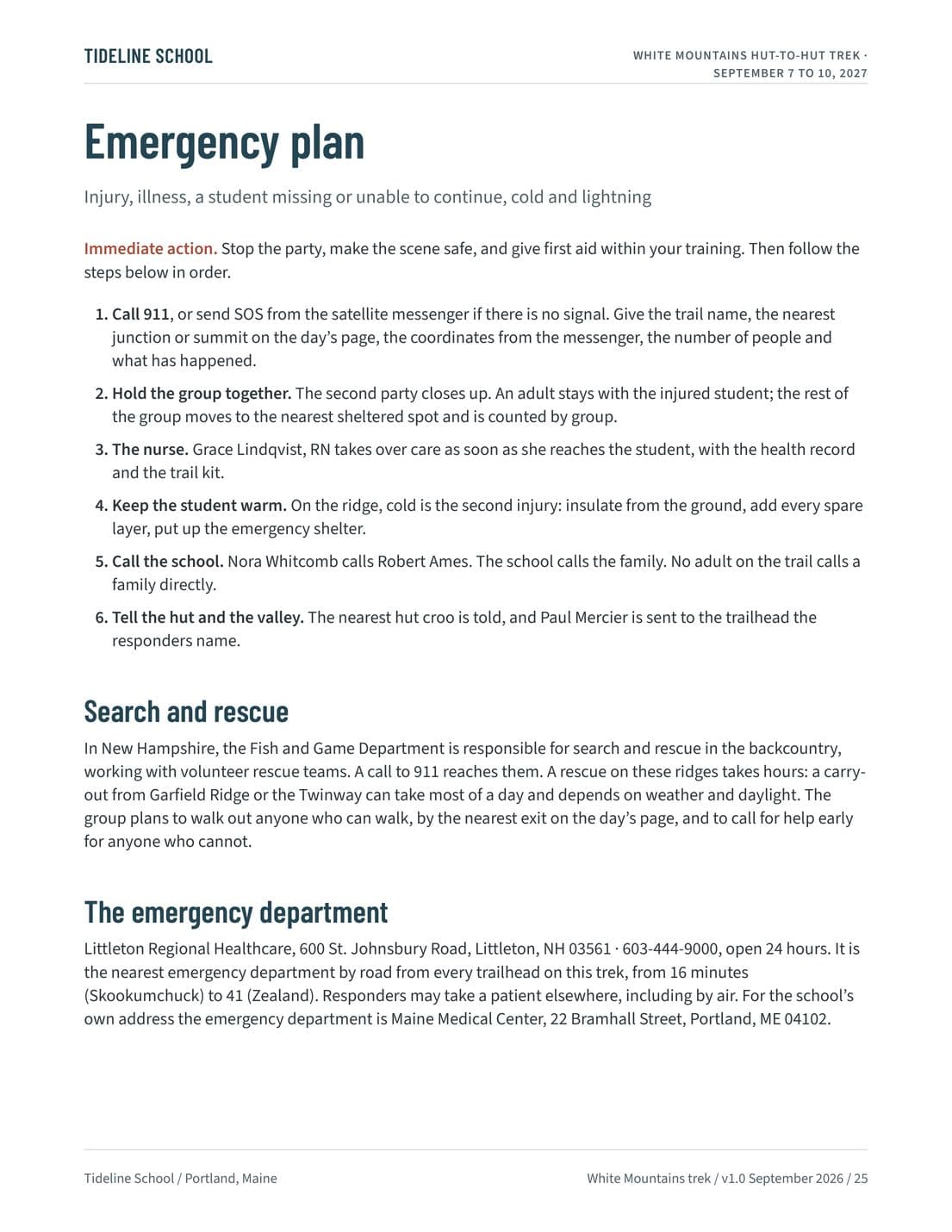
A Route Intelligence page for each hiking day, the weather call and the turn-back triggers, the procedures, and the emergency departments by drive time from every trailhead.
Trip leader
Trip Leader Card
Parties, contacts, and standards, the week in outline, a Route Intelligence page for each hiking day, the communication plan and the weather decision, and the emergency plan. Every trail adult carries a copy.
Look inside
Trail adults
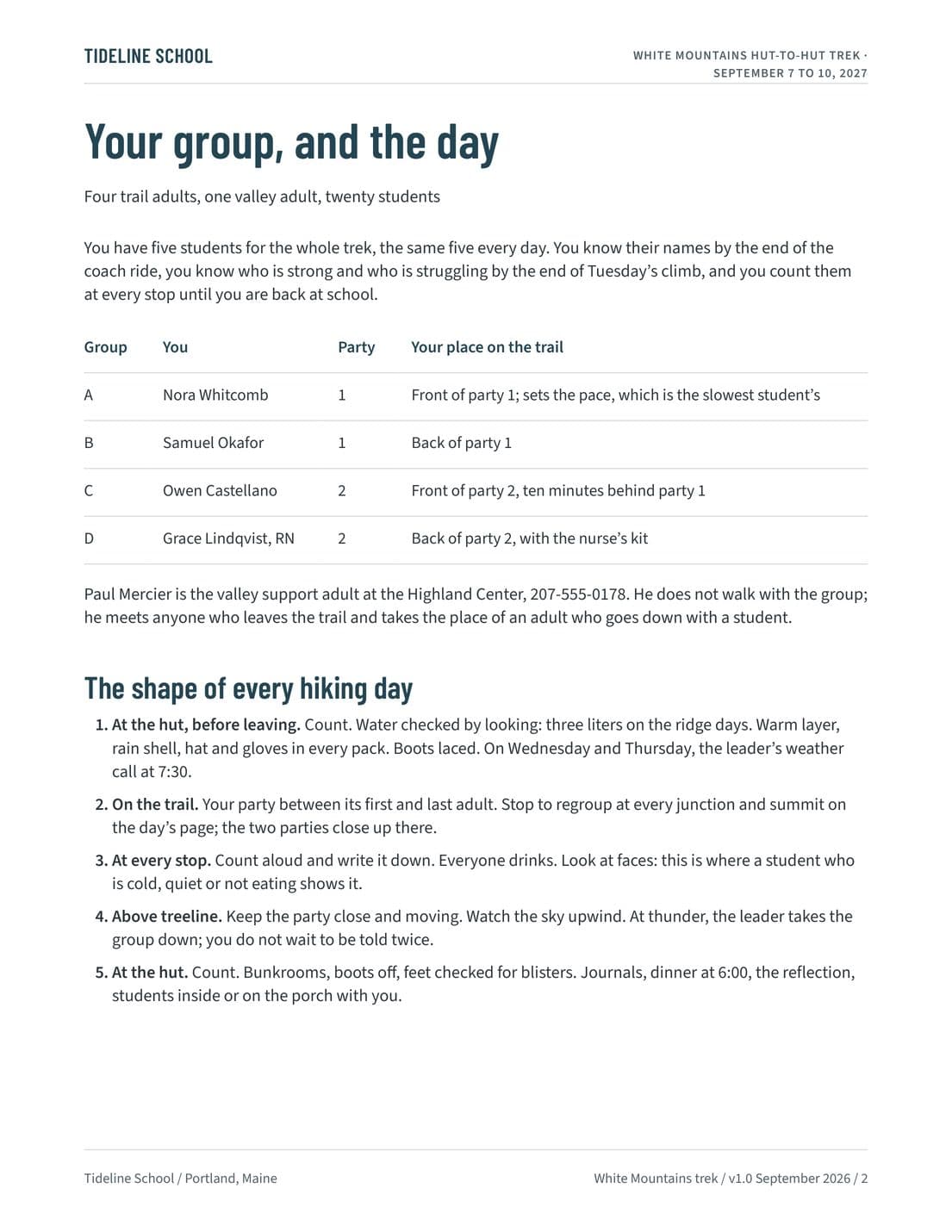
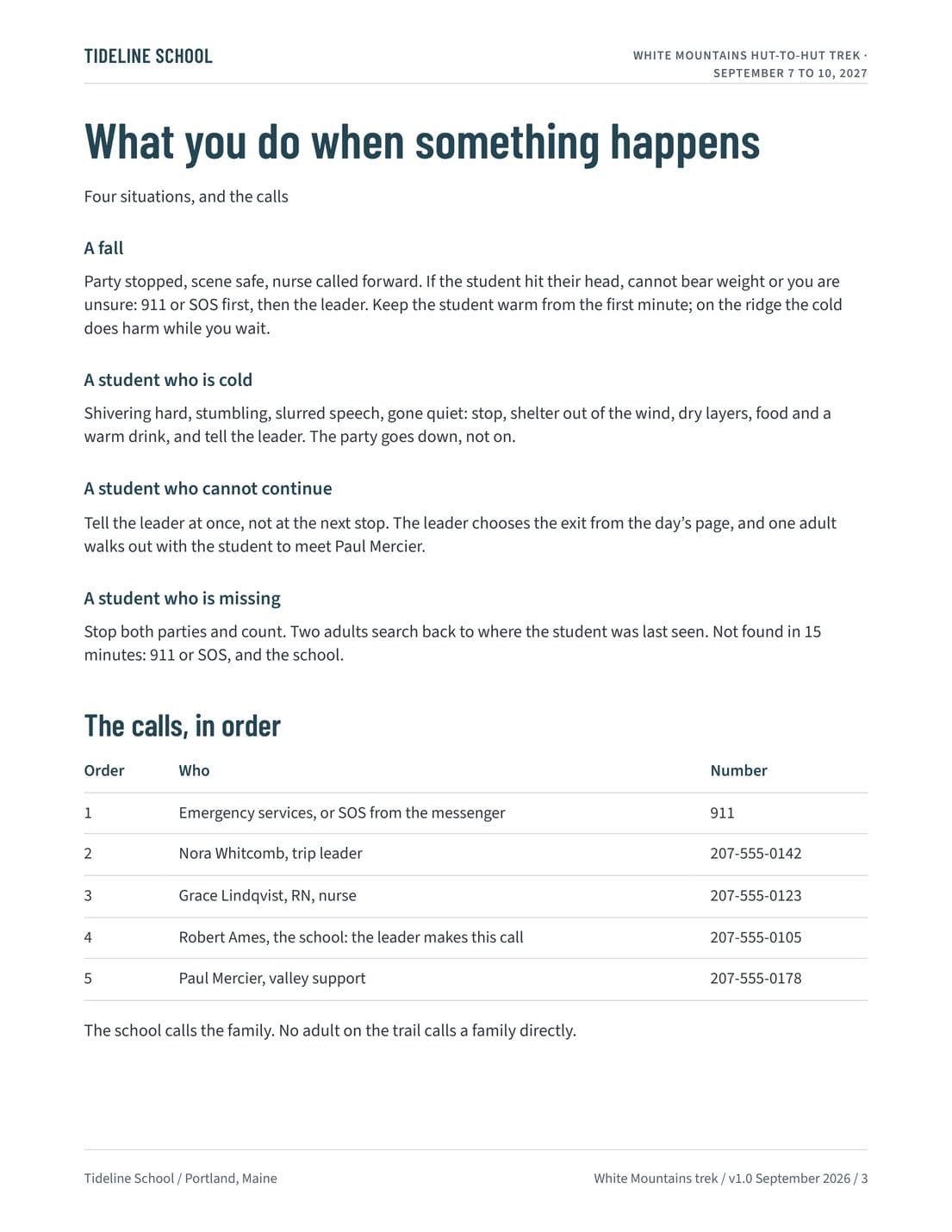
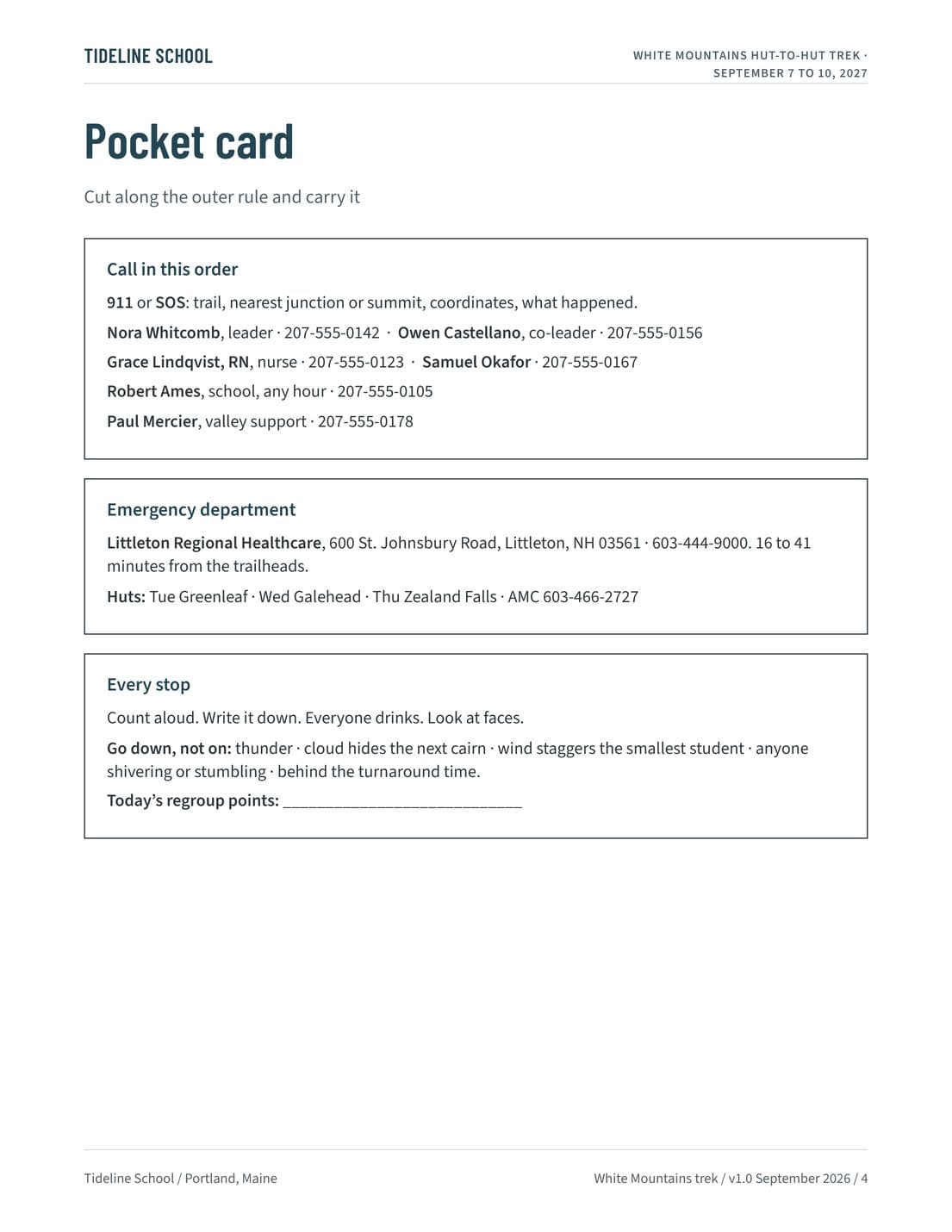
Chaperone Briefing and Pocket Card
For the adults who each take five students all week: their group and place in the party, the shape of a hut-to-hut day, what to do when something happens, the calls in order, and a pocket card to cut out and carry.
Look inside
Timing each hiking day
How much light each day has, how the planned day sits inside it, and how much of each route is open ground above the trees.

Trip leader
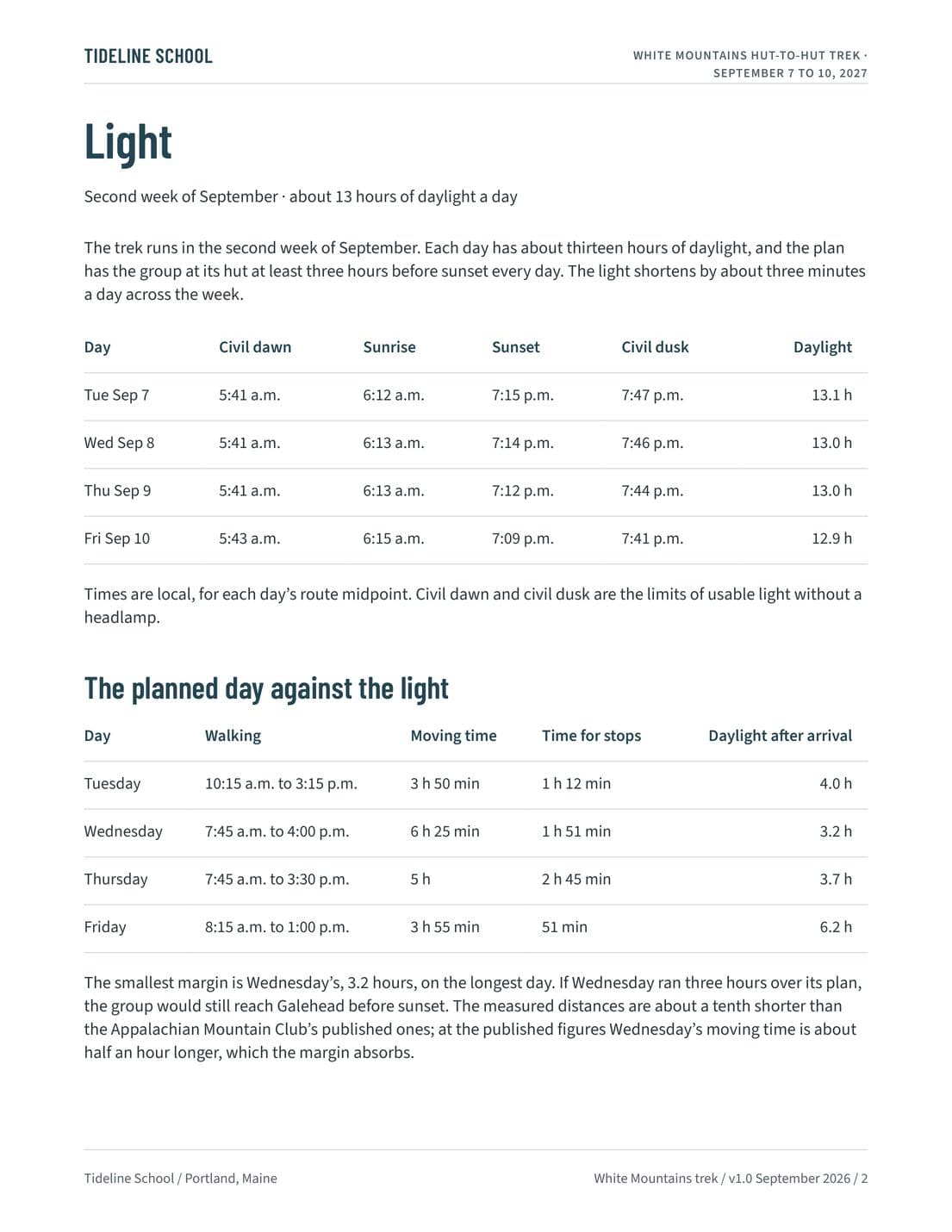
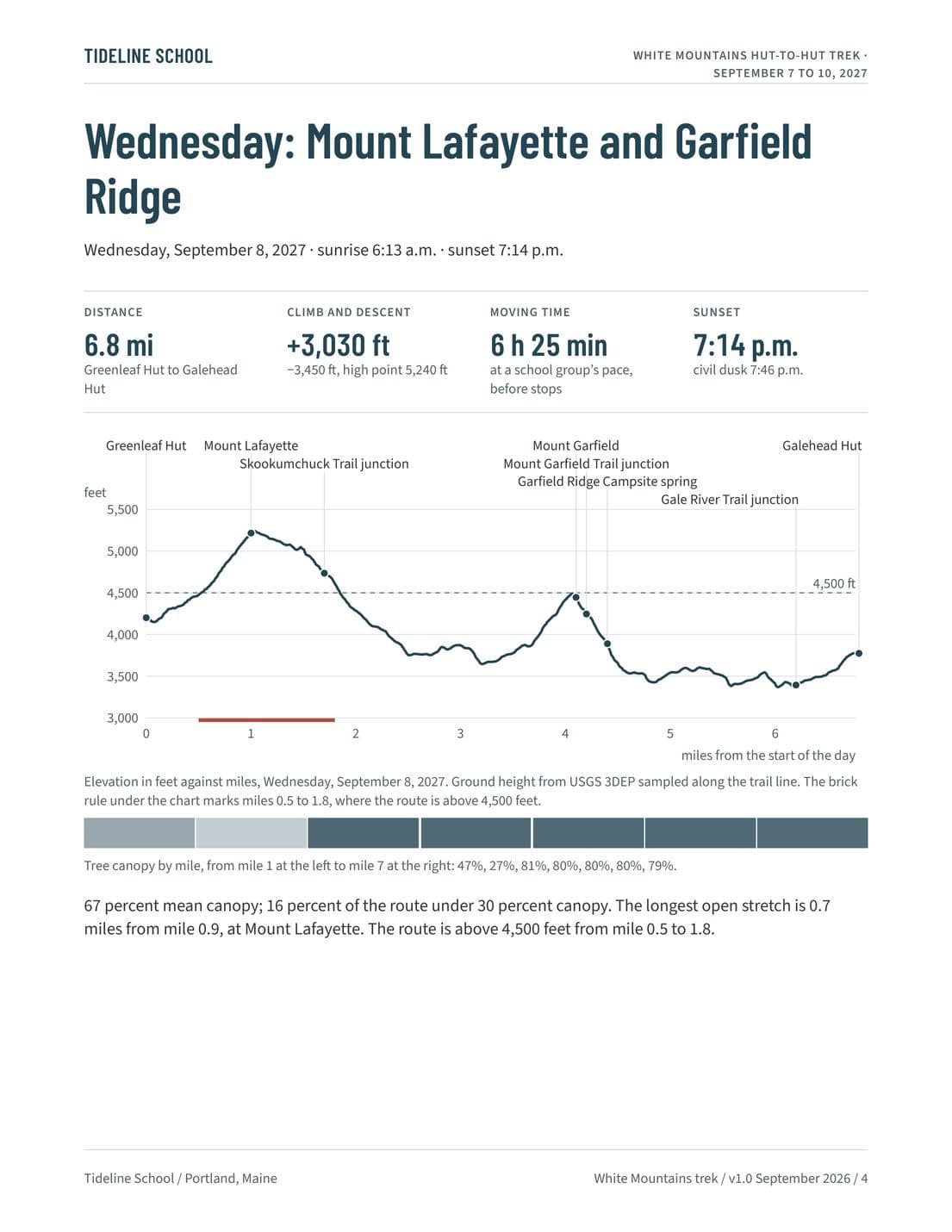
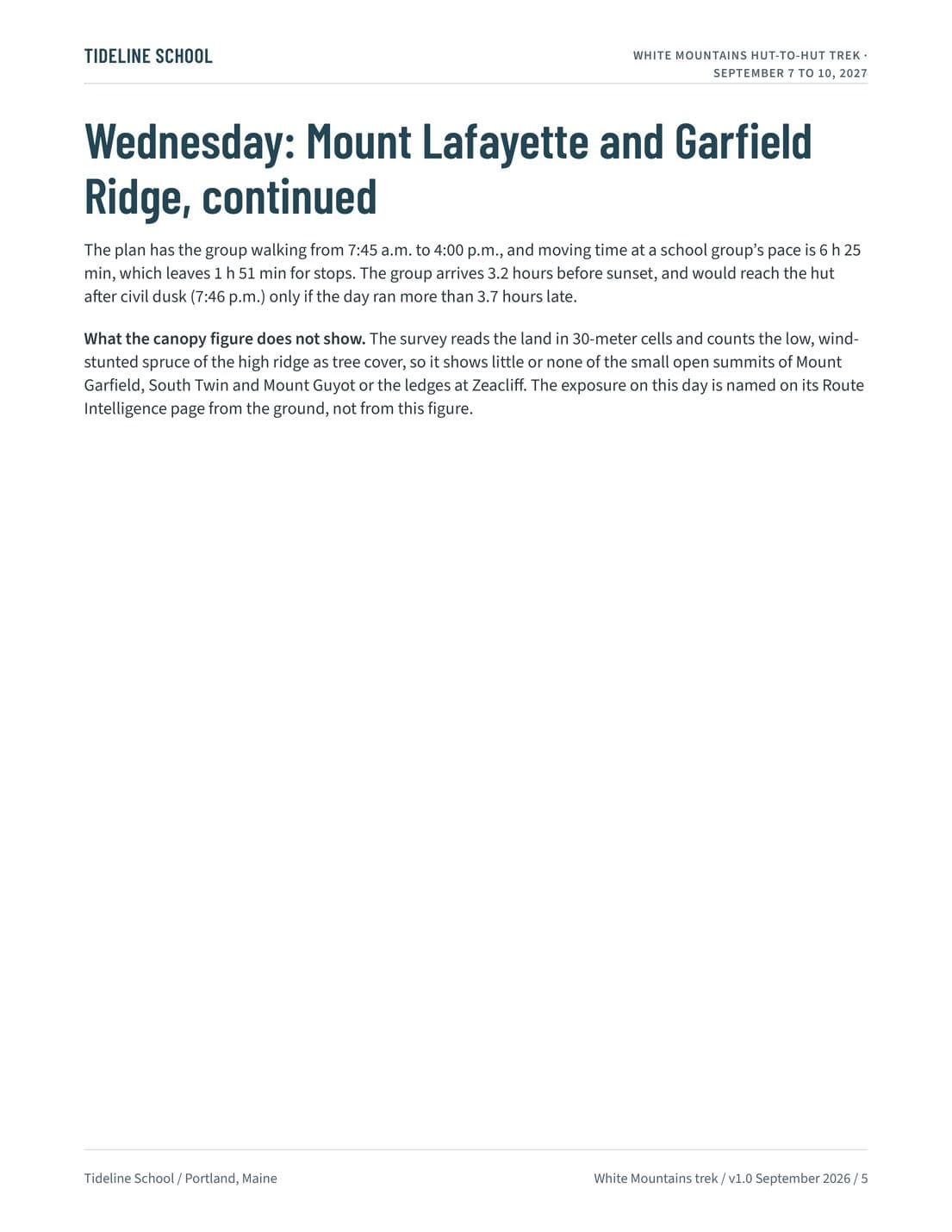
Daylight and Cover Report
How much light each hiking day has, how the planned day sits inside it, and how much of each route is open ground, with each day's elevation profile and the tree cover along the route. On this trek the ridge weather, not the light, sets the limits.
Look inside
Connecting the trip to learning
The unit Above the Trees: questions carried from the forest to the alpine ridge and back to class.
Teachers
Educational Journey
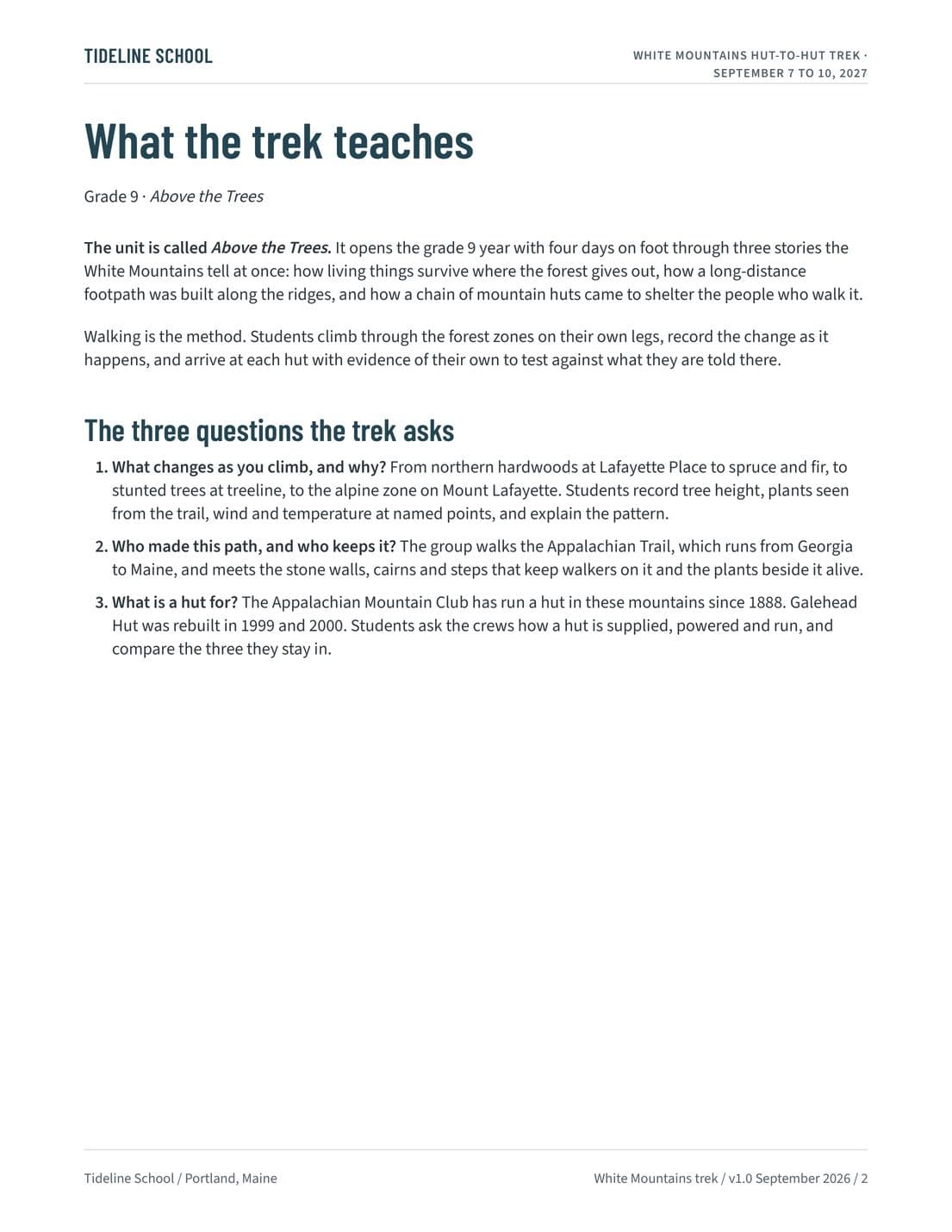
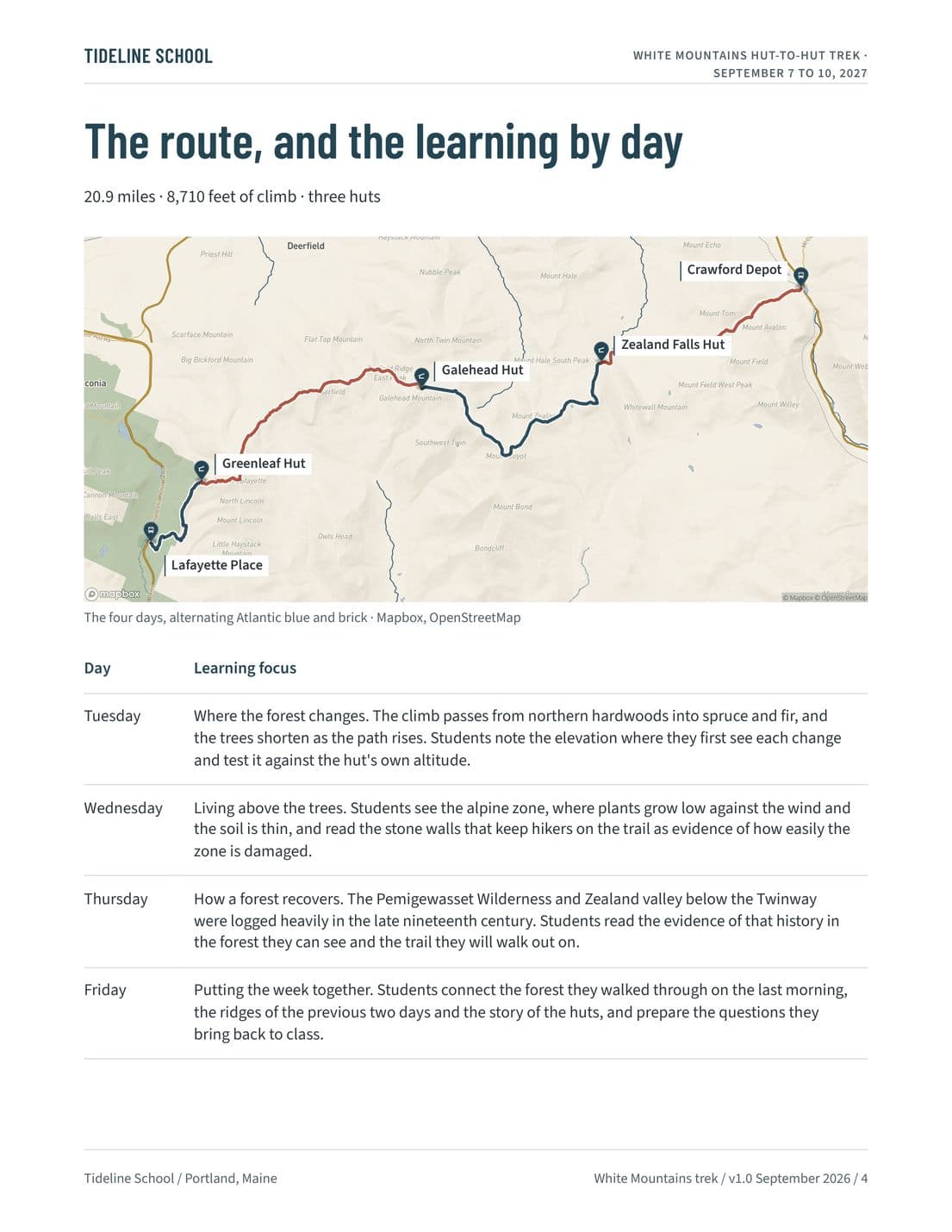
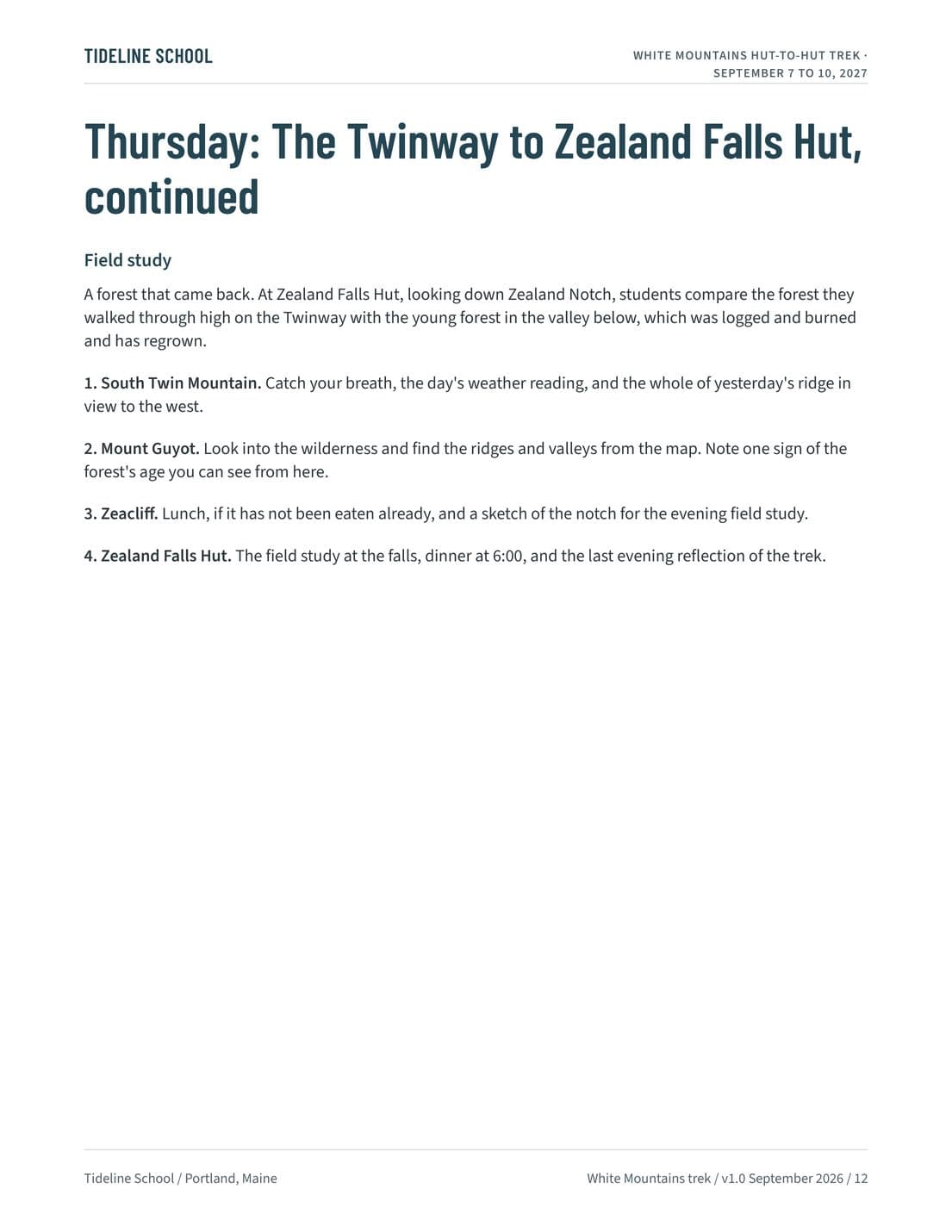
The unit Above the Trees, what each hiking day teaches, a Route Intelligence page for each day, the field study at each hut, the evening reflection, and the field report students write after the trek.
Look inside
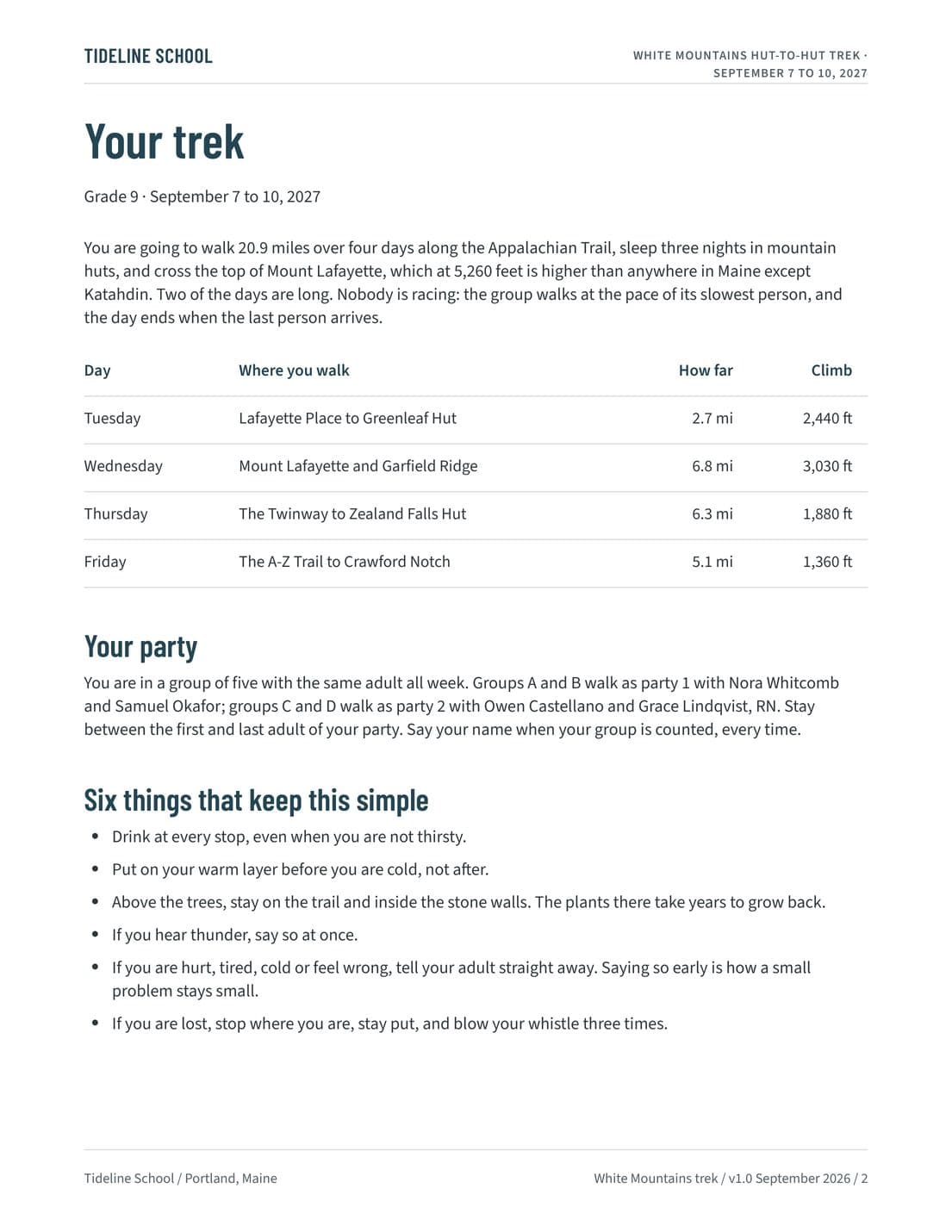
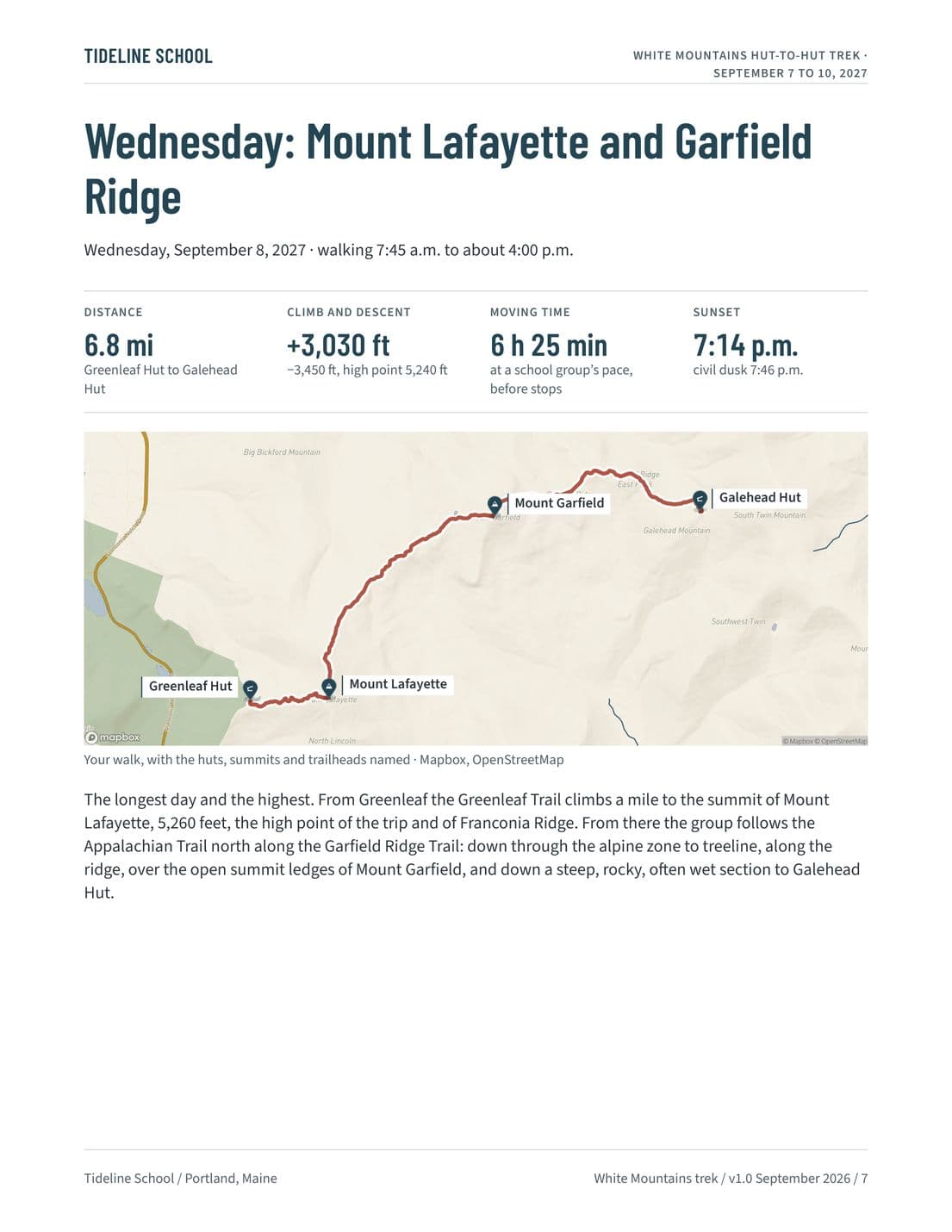
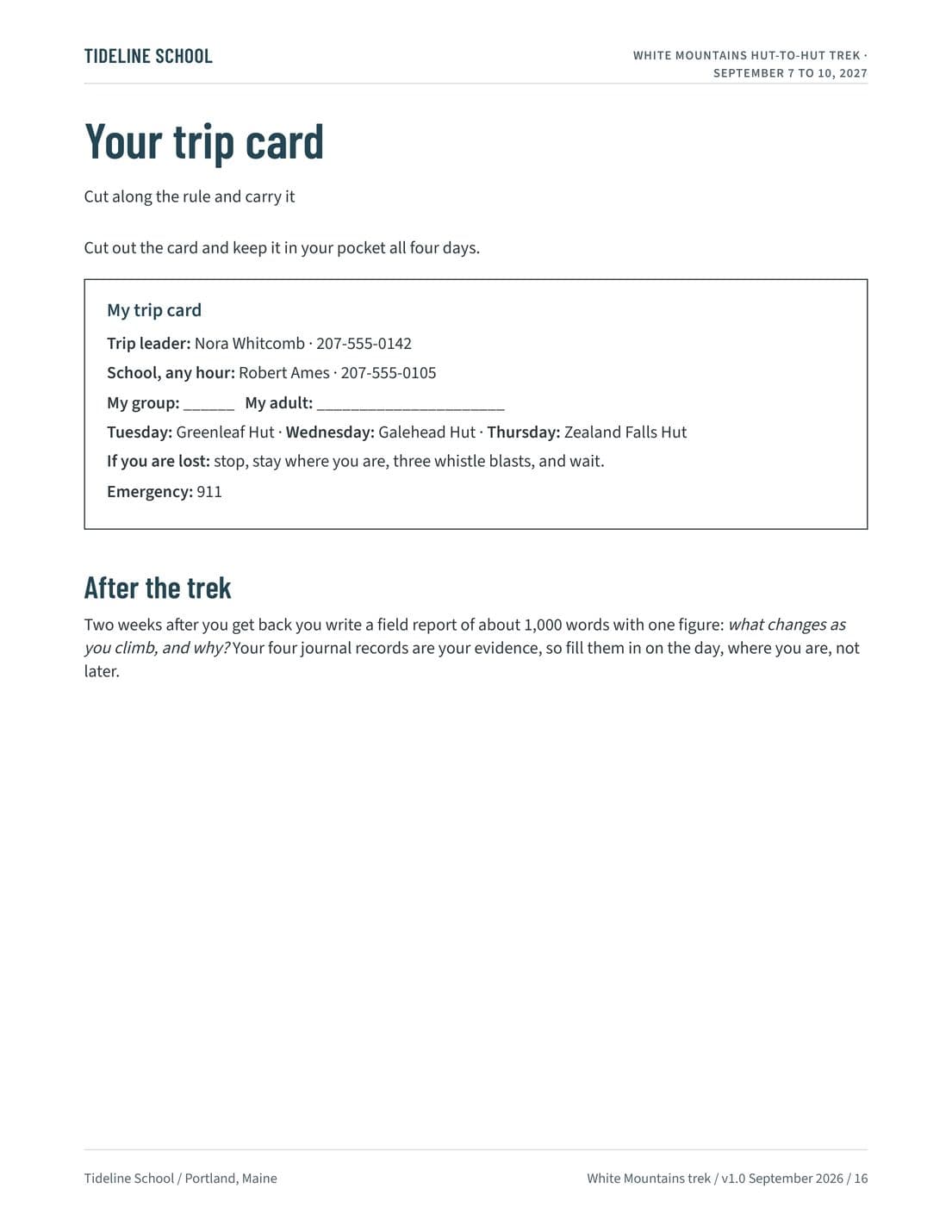
Students
Student Journey Guide
The guide students keep at the top of their pack: the four days, the pack and the huts, a page for each day with its map, elevation profile, and stops, a journal to fill in on the day, and a trip card to cut out and carry.
Look inside
Improving next year's trip
What students, parents, the trip leaders, and the hut crews said, set out for the school's review.
After the trip
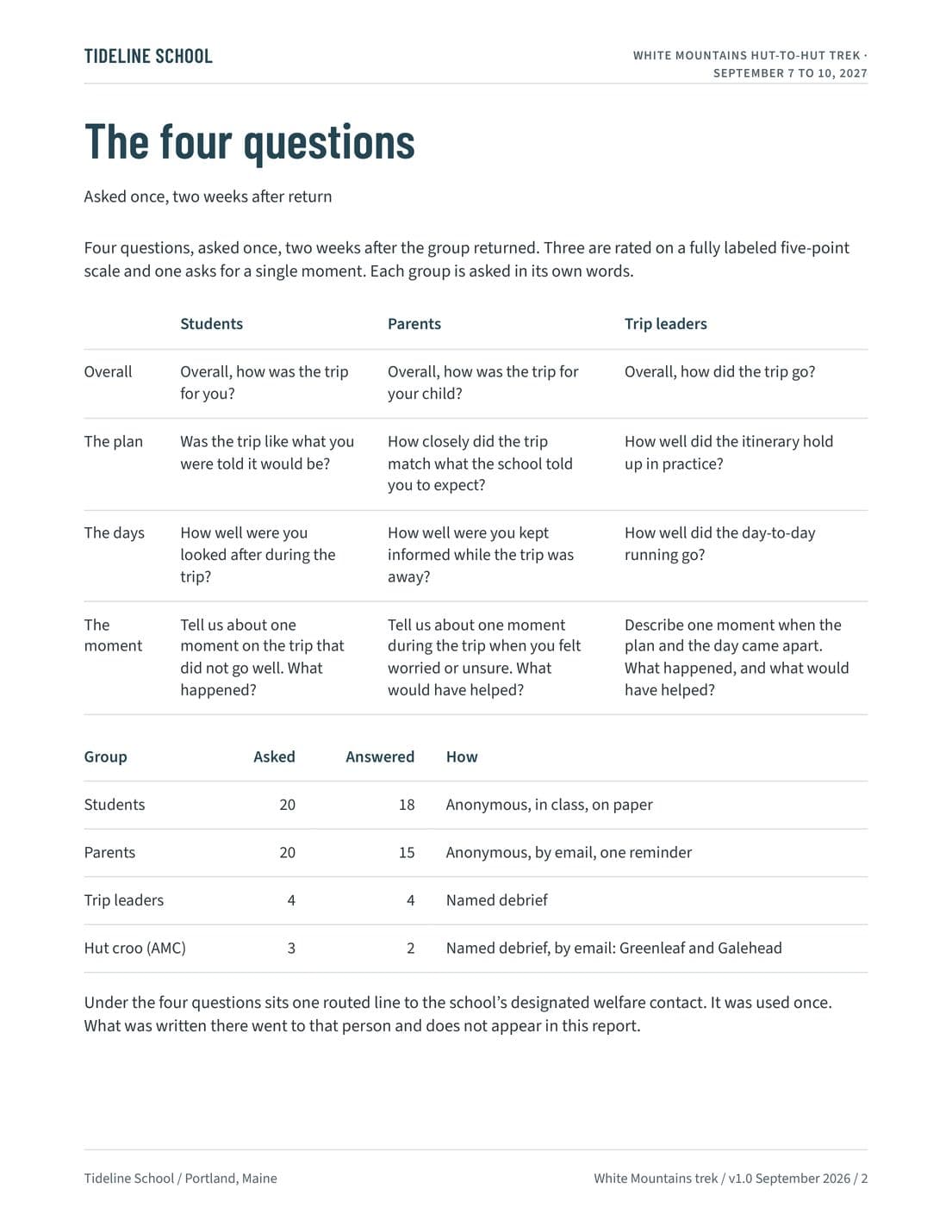
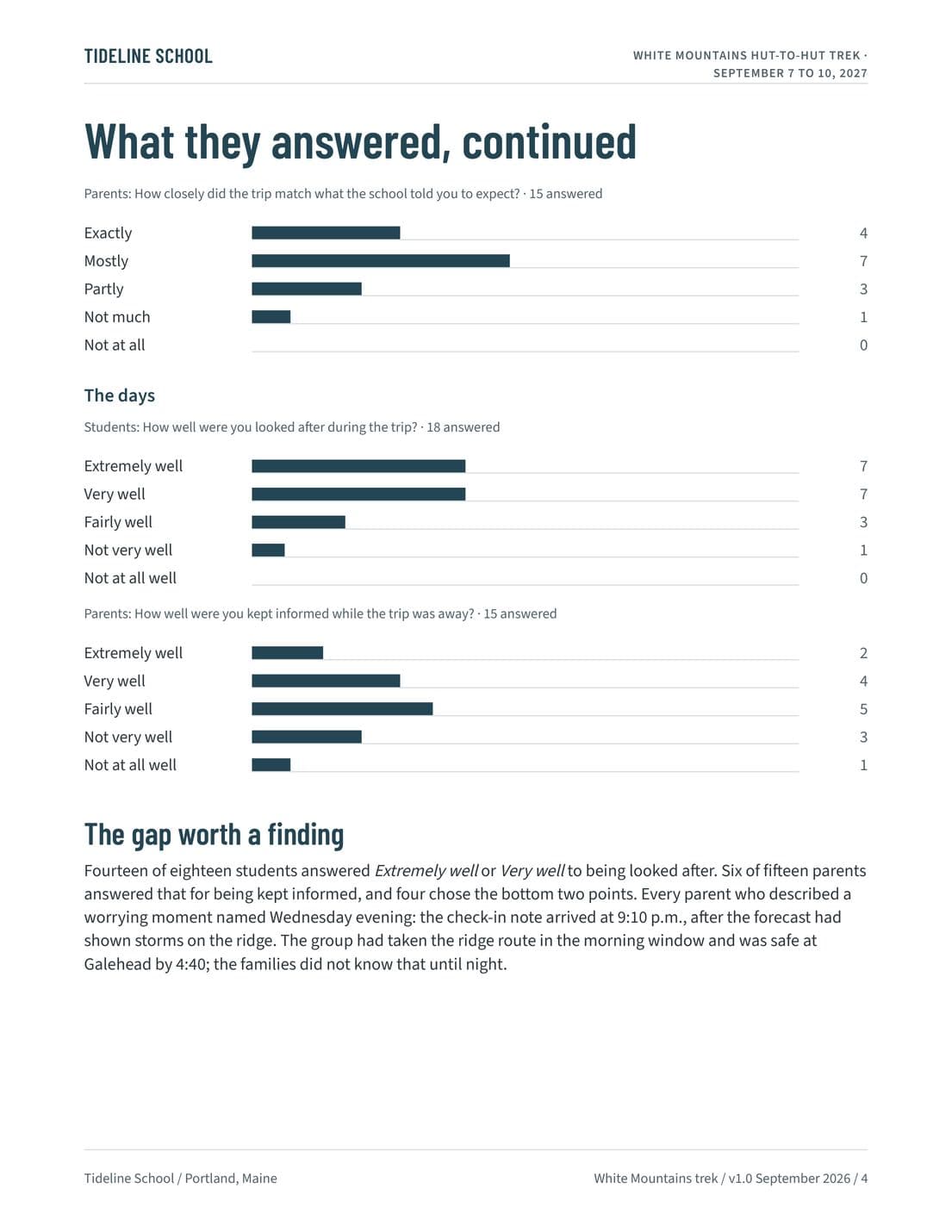
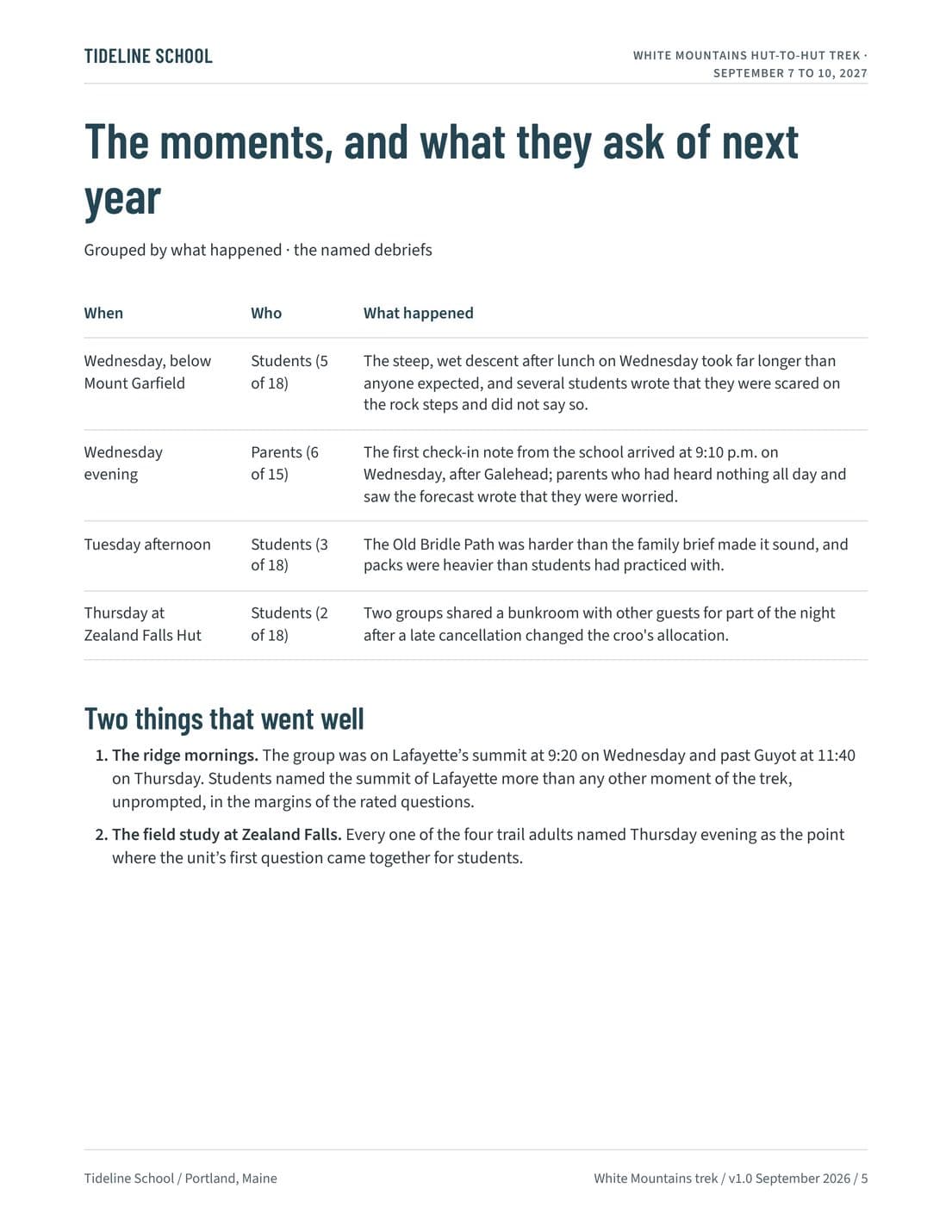
Post-Trip Feedback Report
Four questions asked of students, parents, the trip leaders, and the hut crews after the trek: what each group said, where students' and parents' answers part, and the moments that did not go to plan, each with the day it belongs to.
Look inside
Who decides
The school and any provider it works with retain responsibility for decisions, supervision, live assessments, and final approval.
The Trip Risk Working File is written for the school to review, complete, and approve. Its ratings are a starting point, its review lines are for the school’s own controls, and the trip leader makes the live assessment on the day.
Other worked trips
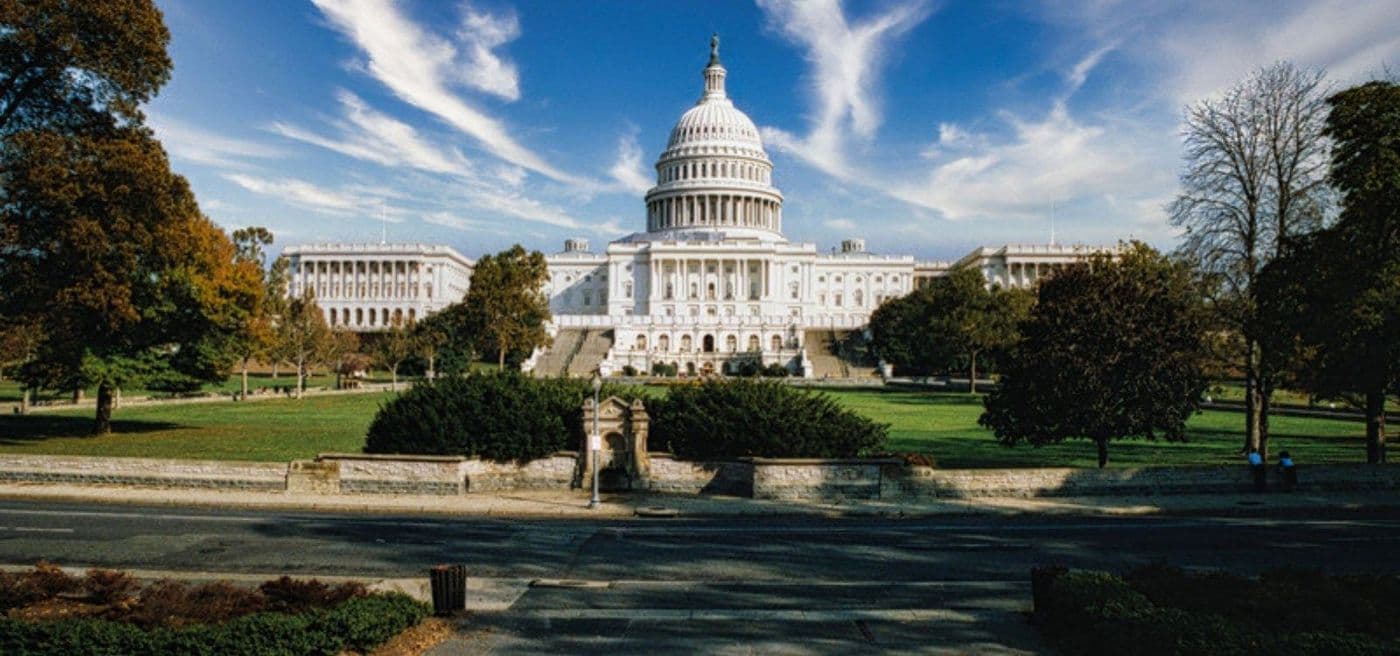 City · Washington, DCWashington, DCHorizon Ridge School of ClevelandSee the documents →
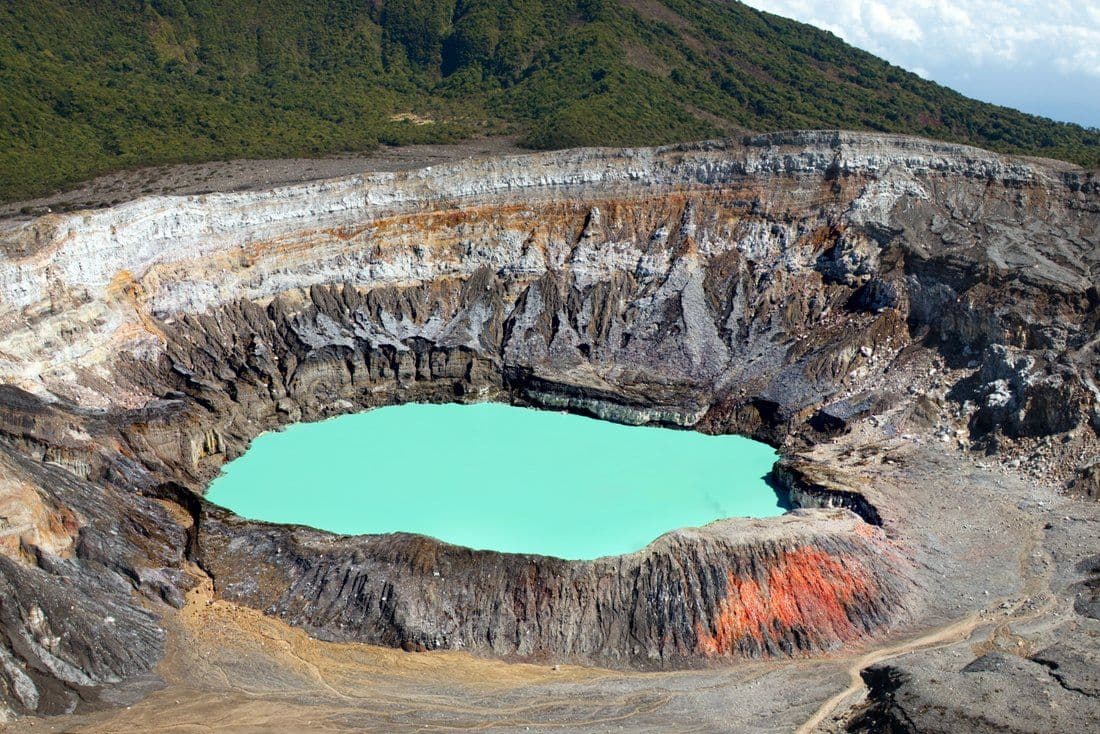 Service · Central AmericaCosta RicaHorizon Ridge School of ClevelandSee the documents →
 Culture · EuropeItalyHorizon Ridge School of ClevelandSee the documents →
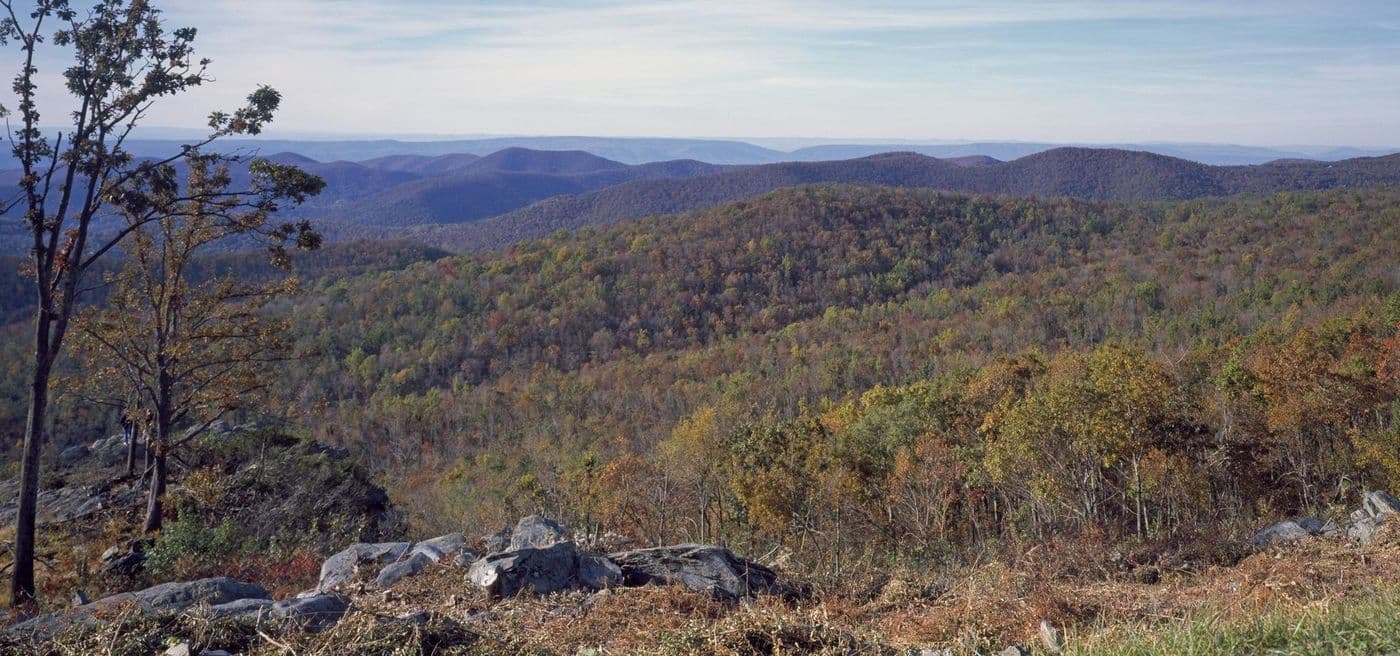 Outdoor · VirginiaShenandoah National ParkHorizon Ridge School of PhiladelphiaSee the documents →
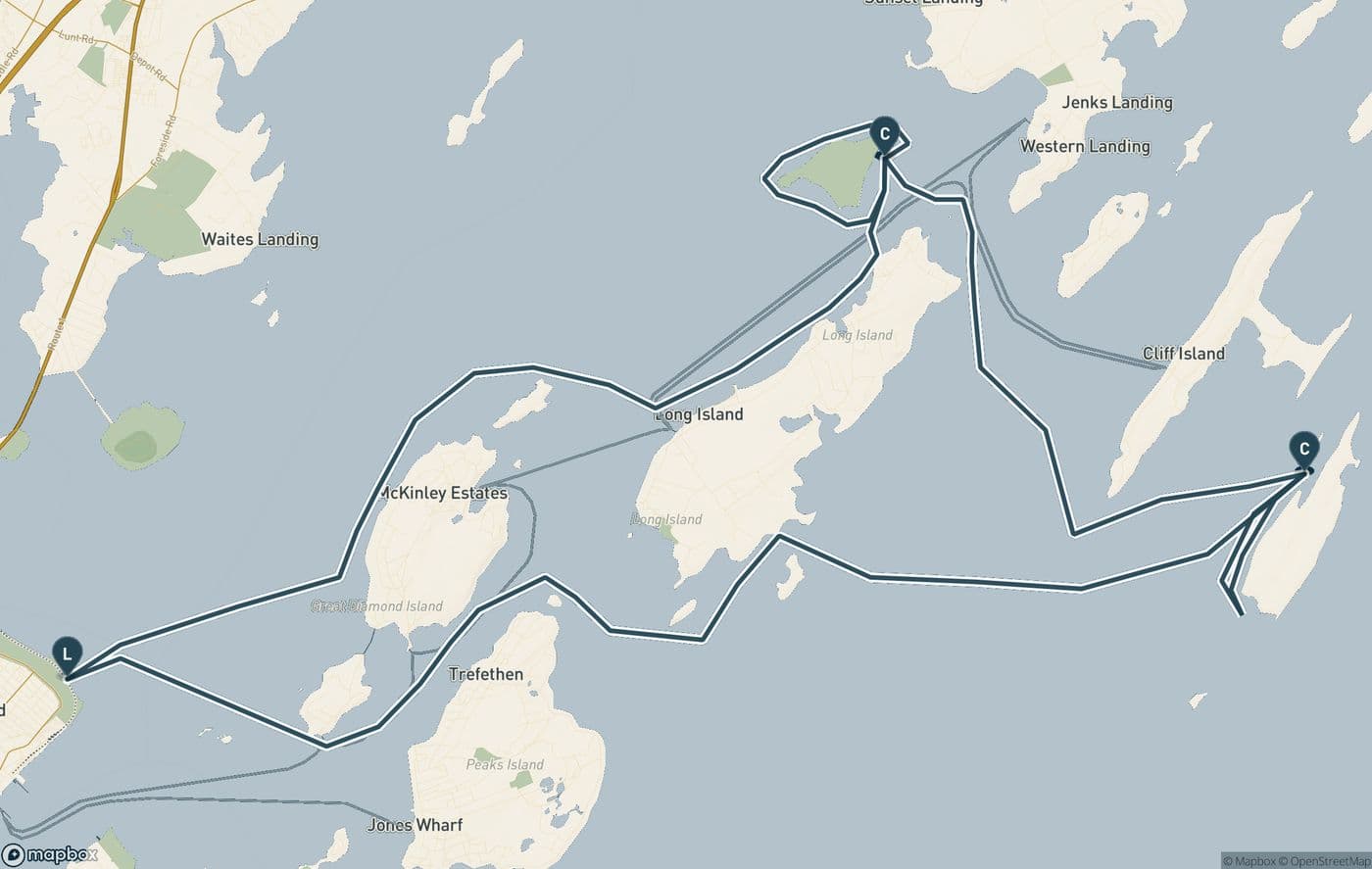 Outdoor · Maine coastCasco BayTideline SchoolSee the documents →The Trip Package →
Horizon Ridge School of Cleveland is a fictional school; its location is shown for illustrative purposes.
Horizon Ridge School of Philadelphia is a fictional school; its location is shown for illustrative purposes.
Tideline School is a fictional school; its location is shown for illustrative purposes.